Contact enrichment software helps SDRs save time by verifying email addresses, adding job titles, and checking whether contacts still work at their listed companies. This matters because B2B contact data can decay by approximately 30% per year, making even a previously accurate prospect list unreliable over time.
However, enrichment tools differ in how they keep contact data accurate. Some return information from their existing databases, while others validate records, combine data from multiple sources, and flag low-confidence results before they reach your CRM.
To help you choose the right solution, this guide compares 15 contact enrichment software platforms across five key areas: data accuracy, geographic coverage, CRM integration, compliance, and pricing.
How We Evaluated These 15 Tools
Tools were selected based on verified market presence in B2B outbound and RevOps workflows, meaningful differentiation in at least one of accuracy method, geographic coverage, or use-case fit, and publicly documented pricing or confirmed vendor data as of Q3 2026.
Each tool was assessed against five criteria: how it validates before writing to a CRM, which geographies it covers reliably, which CRM integrations it supports natively, its compliance posture, and its entry-level price.
Product documentation and first-hand product experience were reviewed for each platform, alongside verified user reviews from G2, Capterra, and TrustRadius to assess real-world performance. The ranking places general-purpose enrichment tools with the broadest applicability first, followed by specialist tools with narrower but deep use cases.
What Is Contact Enrichment Software?
Contact enrichment software automatically appends and updates company and contact records using external data sources. When a prospect submits a form, signs up for a product, or enters your CRM as a bare email address, the platform fills in job title, company size, industry, direct phone, and LinkedIn profile without manual research.
The core difference between enrichment software and a B2B database is how you interact with it: a database is queried on demand; enrichment software integrates with your CRM and runs continuously, so records arrive complete before an SDR opens them.
15 Tools at a Glance: Quick Comparison Table
| Tool | Best For | Contact Data | Compliance | Free Plan | Starting Price |
|---|---|---|---|---|---|
| Pintel.ai | Highest global coverage | Verified email, phone, LinkedIn | GDPR, CCPA, CPRA, SOC 2 | ✓ | $49/mo |
| Clay | Enrichment orchestration | Email, phone, LinkedIn (source-dependent) | GDPR, CCPA | ✓ | $185/mo |
| 6sense | Enterprise ABM + intent | Email, phone | GDPR, CCPA, SOC 2 | No | Custom |
| Demandbase | Account-based marketing | Email, phone | GDPR, CCPA, SOC 2 | No | Custom |
| RocketReach | Multi-channel contact lookup | Email, phone (email-only on entry plan) | GDPR, CCPA | ✓ | $39/mo |
| Hunter.io | Email finding and verification | Email, job title, department | GDPR | ✓ | $34/mo |
| Snov.io | Email finding + outreach | Email, phone, company data | GDPR, CCPA | ✓ | $30/mo |
| UpLead | Verified email at export | Email, phone | GDPR, CCPA | Trial only | $99/mo |
| Seamless.ai | US SDR teams | Email, phone | CCPA, SOC 2 | ✓ | Custom (free: 50 credits/mo) |
| Bombora | B2B intent data | Intent signals only, no direct contacts | GDPR, CCPA | No | Custom |
| FullContact | Identity resolution, PLG | Email, phone, LinkedIn | GDPR, CCPA, SOC 2 | No | Custom |
| Leadfeeder | European website visitors | Email, phone | GDPR (EU-focused) | ✓ | €79/mo |
| Surfe | LinkedIn-to-CRM enrichment | Email, phone, LinkedIn | GDPR, CCPA | ✓ | $29/user/mo |
| Wiza | Sales Navigator export | Email, phone, LinkedIn | GDPR, CCPA | ✓ | $49/user/mo (Team Starter) |
| Datanyze | Tech-ICP targeting | Email, phone | GDPR, CCPA | ✓ | $21/mo (annual) |
Based on vendor documentation, user reviews, and publicly available information. Contact vendors directly for the most current pricing and feature details.
Related reading: CRM Enrichment Tools Guide | Company Data Enrichment Guide
How to Choose Contact Enrichment Software: The 5-Signal Enrichment Fit Test
Evaluate contact enrichment software across five areas before choosing a platform: data validation, geographic coverage, buying signals, automation, and CRM integration.
Signal 1: CRM Validation Before Write
Choose tools that validate contact data before adding it to your CRM. Look for email verification, cross-source matching, and confidence checks that flag uncertain records instead of writing potentially inaccurate data.
Signal 2: Geographic Coverage for Your ICP
Data accuracy and coverage vary by region. A platform with strong US coverage may have gaps across EMEA, APAC, and LATAM. Ask vendors for match rates in your target markets rather than relying only on global accuracy claims.
Signal 3: Buying Signals Alongside Contact Data
Contact details identify decision-makers, while buying signals help reveal when they may be ready to buy. Look for signals such as funding rounds, hiring activity, intent data, and technology changes to prioritize outreach.
Signal 4: Automated, Real-Time Enrichment
Automated enrichment updates records when new contacts enter your CRM, reducing manual research. Check whether the platform supports real-time workflows, scheduled updates, and enrichment triggers that fit your sales process.
Signal 5: Native CRM Integration
Look for native integrations with tools such as Salesforce, HubSpot, and Pipedrive, including configurable field mapping. If your team needs programmatic enrichment, explore the contact enrichment API alongside native CRM connectors.
The 15 Best Contact Enrichment Software Tools for B2B Teams
Here are the 15 best contact enrichment tools for B2B teams, starting with Pintel.ai.
Pintel.ai: Verified Email, Phone, and LinkedIn With Highest Global Coverage, Not a Sequencing Tool
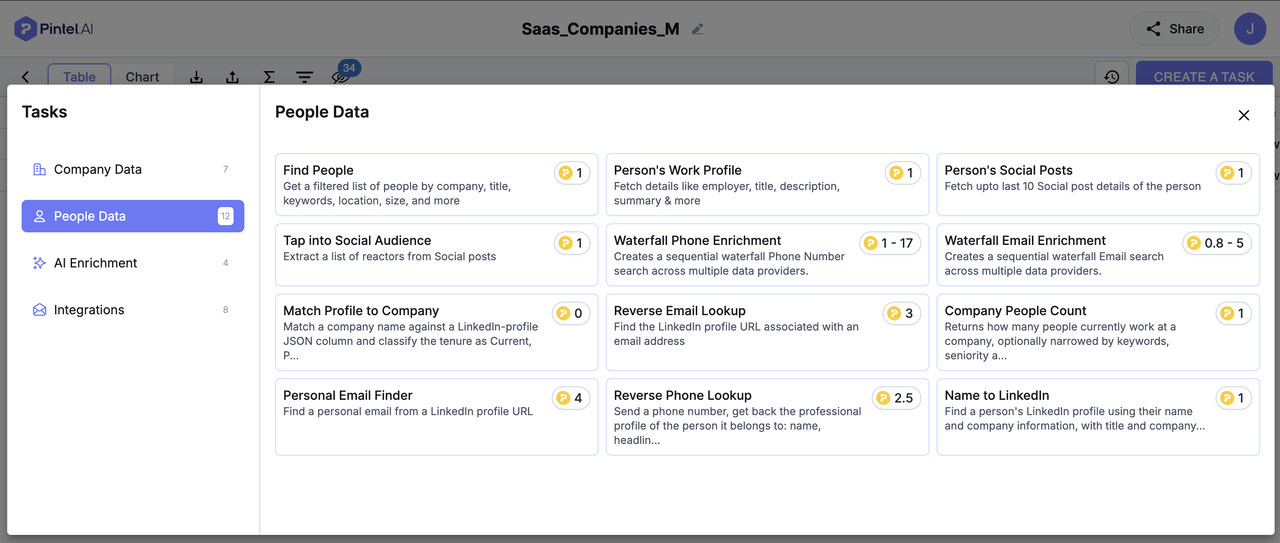
Pintel.ai delivers the broadest global contact coverage of any platform on this list. It combines its own proprietary database with a waterfall stack across 20-plus regional data partners, returning verified email addresses, direct phone numbers, and LinkedIn profiles on every enriched record. The 95%-plus match rate applies to confirmed fields only, not retrieved-but-unvalidated data.
- Returns verified email, phone, and LinkedIn profile on every enriched contact record
- Strong B2B data coverage across EMEA, APAC, GCC, MENA, and other global markets through regional data partners and waterfall contact enrichment.
- Waterfall enrichment queries multiple sources in priority sequence for the highest-confidence result
- Regional data partners combined with Pintel.ai’s own proprietary database for region-wise global coverage
- Native CRM integration with Salesforce and HubSpot; new records auto-enrich on entry
- ICP filtering reads full work profiles in plain English, not just title keywords
- Fully compliant with GDPR, CCPA, CPRA, and FPA; DPA available; SOC 2 certified
Known Limitations
- No outreach sequencing: Pintel.ai is built for enrichment and ICP filtering only. Teams need a separate sequencing or dialer tool for email and call workflows; it is not a combined outreach platform.
- Newer market presence: As a younger platform, Pintel.ai has a smaller volume of third-party user reviews than established vendors. Request a live data sample on your specific ICP geography and title mix before committing to a plan.
Clay: No-Code Enrichment Orchestrator Across Multiple Data Sources, Costs Rise Steeply at Scale
Clay is not a data provider. It is an enrichment orchestration layer that connects to more than 150 data sources and runs them in a waterfall sequence the user defines in a no-code interface.
- No-code waterfall builder that connects and sequences 150-plus enrichment sources
- Integrates with Apollo, Clearbit, LinkedIn, and most major data providers
- Runs AI logic on enriched rows for scoring, tagging, and copy generation
- Native Salesforce and HubSpot integration with field mapping in the UI
- Compliance posture depends entirely on which sub-providers are connected
Known Limitations
- Steep learning curve: Building waterfall logic, configuring conditional rows, and managing credit usage across 150-plus sources requires significant setup time. Teams without a dedicated RevOps or technical resource consistently underuse it.
- No proprietary database: Clay is an orchestration layer only. Data quality depends entirely on which sub-providers you connect; Clay itself has no owned data layer, so accuracy varies by source configuration.
- Credit costs compound at scale: High-volume enrichment runs can push monthly spend well above headline plan prices without careful waterfall configuration and credit-cap rules in place.
“I find the learning curve with Clay quite steep, making it challenging to start using.”- Verified Reviewer, Mid-Market | G2
6sense: AI-Powered Intent Scoring for Enterprise ABM, Contact Data Thin Outside North America and Europe
6sense layers AI-generated buying stage predictions and keyword-level intent data onto contact records. The enrichment layer identifies which accounts are in an active buying cycle and which contacts at those accounts show the strongest engagement signals.
- AI classifies each account into a buying stage from awareness through to purchase
- Tracks more than 6,000 B2B intent topic categories across its publisher network
- Contact database is strongest in North America and Western Europe
- Native integration with Salesforce and HubSpot with real-time account and contact updates
- GDPR and CCPA compliant; Data Processing Agreement available on request
Known Limitations
- Enterprise-only pricing: Annual contracts typically range from $30,000 to $100,000-plus per year. There is no self-serve or SMB tier, making 6sense impractical for teams under 50 seats or without an established ABM budget.
- Opaque intent scoring: AI-generated buying stage predictions are not transparent. Users report false positives that direct SDRs toward accounts that are not actually in a buying window, wasting outreach cycles.
- Months-long implementation: Full setup requires a dedicated RevOps admin and typically takes two to four months before usable segments are active and producing reliable pipeline signals.
“Exclusions are too simple. There’s no logic for two conditions, either/or statements.”- Verified Reviewer | TrustRadius
Demandbase: Account Intelligence With Automated CRM Updates, Not Built for Individual Contact Lookup at Scale
Demandbase combines company-level data, contact records, and intent signals into an ABM platform. Its CRM enrichment layer updates records automatically when company or contact data changes.
- Tracks funding rounds, headcount changes, tech stack updates, and leadership moves at target accounts
- Automatically pushes updated contact and company data to Salesforce without manual steps
- Intent signals sourced from Demandbase’s own B2B publisher network
- Enrichment data feeds into display and social ad targeting alongside sales outreach
- GDPR and CCPA compliant; SOC 2 Type II certified
Known Limitations
- ABM-first design: Contact lookup volume and coverage are secondary to account intelligence. Teams doing high-throughput individual contact enrichment at scale will hit coverage gaps that a dedicated enrichment platform would not.
- Implementation complexity: Setup takes four to eight weeks and typically requires ongoing RevOps management. Teams without dedicated operations support consistently underuse the platform after the initial deployment.
- High entry cost: Enterprise contracts and multi-year commitments make Demandbase impractical for teams without a committed ABM motion, a clear account list, and budget allocated specifically to account intelligence.
RocketReach: Email and Phone Lookup With Multi-Geography Reach, Coverage Thins in APAC and Emerging Markets
RocketReach sources contact data from public profiles, company websites, and proprietary collection, then validates emails through syntax, DNS, and SMTP checks before returning results.
- Accepts email address, LinkedIn URL, or name-and-company pair as lookup input
- Covers professionals across 35 million companies in multiple geographies
- SMTP verification runs before results are returned, not at the point of export
- CSV bulk upload and API access available on all paid plans
- Native connectors for HubSpot, Salesforce, Pipedrive, and Zoho
- GDPR and CCPA compliant; Data Processing Agreement available
Known Limitations
- Data accuracy and outdated records: Outdated emails and missing phone numbers are a recurring pattern, particularly for contacts who changed roles in the past 12 months. Users report needing to verify records before outreach.
- Geographic coverage gaps: APAC, LATAM, and non-English-speaking European markets have significantly lower fill rates than North America. Non-English LinkedIn profiles return fewer results.
- Credit system constraints: Credits run out quickly during active prospecting campaigns. The free trial provides too few credits to meaningfully evaluate data quality on a specific ICP before committing to a paid plan.
“My main challenge while using RocketReach was the coverage and accuracy of the contacts.”- Brendan C., Business Development Rep | Capterra
Hunter.io: Email Finding and Domain Verification, No Direct Phone Numbers in Any Plan
Hunter.io crawls publicly available sources to index email formats at the company domain level and validates addresses in real time. It is not a full enrichment platform but a strong email-layer tool in a broader stack.
- Domain search returns all indexed email addresses with individual confidence scores
- Finds the most likely email address for a named person at a given company
- Runs SMTP, DNS, and format checks on every address before returning results
- Bulk task tool handles batch name-and-domain lookups without manual input
- API access available on all paid plans for programmatic email enrichment
- GDPR compliant; all data sourced from publicly available web pages
Known Limitations
- Email only, no phone data: Hunter.io returns zero phone numbers on any plan. Teams that need direct dials must pair it with a separate data provider, adding cost and workflow complexity to every outreach sequence.
- Publicly indexed domains only: Coverage depends on what is visible on company websites and public pages. Niche industries, small companies, and organizations with minimal web presence return few or no results.
- Not a full enrichment platform: Hunter.io finds emails; it does not return job titles, LinkedIn URLs, phone numbers, or company firmographics. Teams needing full contact records need additional tools alongside it.
Snov.io: Email Finding With Built-In Outreach Automation, Limited Phone Data vs. Full Enrichment Platforms
Snov.io combines contact search with built-in email sequence tools, making it one of the few platforms that handles enrichment and outreach without a separate integration.
- Sources verified email addresses and phone numbers from LinkedIn profiles, company websites, and proprietary collection
- Validates addresses at the point of export and flags invalid ones before download
- Built-in cold email sequences let teams run outreach without a separate sequencing tool
- Chrome extension captures contact data from LinkedIn and company websites in one step
- Native connectors for HubSpot, Salesforce, Pipedrive, and Zapier
- GDPR and CCPA compliant across all data sourcing and processing
Known Limitations
- Weak phone data: Phone number coverage is significantly thinner than email coverage. Snov.io is not a replacement for a dedicated phone enrichment platform when direct dial is the primary contact method for your outreach team.
- Email deliverability inconsistency: Verified addresses can still bounce at higher-than-expected rates. Users report needing to double-check contacts before sending sequences to protect sender reputation.
- Team collaboration gaps: No A/B testing in sequences, no HTML email support, and collaboration features are limited for teams using multiple seats across a shared contact database.
“the delivery rate was pretty low”- Verified Reviewer, Marketing Manager | Capterra
UpLead: Verified Email at the Point of Export With an Accuracy Guarantee, Coverage Thins Outside North America
UpLead’s defining feature is export-time verification: email addresses are validated before delivery, not after, with a published 95% deliverability guarantee.
- Verifies every email at the point of export, not from a previously cached result
- 95% deliverability guarantee backs every export; invalid emails are replaced with credits
- Technology stack data is available alongside contact fields for tech-ICP filtering
- Intent data overlay available as an add-on on higher-tier plans
- Native connectors for Salesforce, HubSpot, Pipedrive, and Zoho
- GDPR and CCPA compliant; SOC 2 Type II certified
Known Limitations
- Smaller database than enterprise alternatives: Coverage on niche industries and small-company ICPs is thinner than ZoomInfo or Apollo at comparable price points. Teams with highly specific or niche ICPs will hit gaps faster.
- Credit-based pricing: One credit per unlocked contact means bulk enrichment campaigns can exhaust monthly allocations quickly. High-volume teams will need to calculate cost per contact carefully against the plan tier.
- International coverage: Direct-dial availability and contact completeness drop noticeably outside North America, particularly for APAC and LATAM ICPs where fill rates are lower than the platform average.
Seamless.ai: US B2B Contact Search With LinkedIn Extension and Built-In Dialer, Non-US Coverage Is Uneven
Seamless.ai positions itself as a real-time search engine for B2B contacts, querying live sources rather than returning pre-indexed records on every search. US technology vertical coverage is strong.
- Queries live sources on each search rather than returning static pre-indexed records
- Chrome extension captures LinkedIn profiles and pushes enriched contacts to the CRM in one click
- Built-in dialer and call logging eliminates the need for a separate calling tool
- Generates AI-written outreach copy directly from enriched contact and company data
- Native connectors for Salesforce, HubSpot, Salesflare, and Pipedrive
- CCPA compliant; SOC 2 Type II certified; Data Processing Agreement available on request
Known Limitations
- Data accuracy inconsistency: Real-time source querying can return different results for the same contact across repeated searches. High email bounce rates are a consistent complaint across G2 and Capterra user reviews.
- Cancellation difficulties: Multiple users report difficulty canceling subscriptions and unexpected auto-renewal charges. Annual contracts require early notice periods that are not prominently disclosed during signup.
- Non-US coverage gaps: Coverage outside the US technology sector is unreliable for most ICPs, particularly in APAC and non-English-speaking European markets where fill rates drop significantly.
“Data accuracy can be inconsistent – some contacts are spot on, while others may be outdated or bounce.”- Verified Reviewer | G2 (2026)
Bombora: Intent Data From a Co-op Publisher Network, Does Not Return Direct Emails or Phone Numbers
Bombora’s core product is intent data collected from a co-op of more than 5,000 B2B media sites. It shows which accounts are actively researching your topics; pair it with a contact tool to reach the people.
- Collects behavioral signals from more than 5,000 B2B publisher and media sites
- Detects week-over-week topic consumption surges at the account level
- Identifies accounts showing intent surges; pair it with a contact tool for the specific people to contact
- Native connectors for Salesforce, HubSpot, Marketo, and Pardot
- GDPR and CCPA compliant; all co-op publisher data sourced from opted-in audiences
Known Limitations
- No contact data whatsoever: Bombora returns zero emails or phone numbers on any plan. It identifies accounts in a buying window but cannot tell you who at those accounts to contact. A separate enrichment tool is required for every outreach step.
- Account-level only, not person-level: Signals show which company is researching your topics, not which individual within it. Teams need to layer a contact enrichment tool on top to identify the right decision-maker at a surging account.
- High price with no self-serve tier: Pricing is custom and enterprise-range. There is no trial or self-serve option, which makes it difficult to evaluate ROI before signing a contract.
“The intent data is EXTREMELY pricey.”- Verified Reviewer | G2
FullContact: Personal-to-Professional Email Resolution, Limited Direct Dial Data vs. B2B-First Platforms
FullContact resolves a partial identifier including personal email, phone, or social profile to a verified individual with enriched contact and professional data. Its identity graph spans consumer and professional data. FullContact has shifted its primary focus toward consumer identity resolution and adtech use cases since 2023; B2B teams should confirm current contact enrichment feature availability with the vendor before committing.
- Resolves personal email addresses such as Gmail and Outlook to verified professional work profiles
- Cross-links email, phone, social profiles, and company data into a single unified contact record
- API accepts email, phone, Twitter handle, or LinkedIn URL as the input identifier
- Enriches company records from a domain input with headcount, industry, and tech stack fields
- Supports privacy-safe audience enrichment without exposing raw personal identifiers
- GDPR and CCPA compliant; SOC 2 Type II certified
Known Limitations
- Consumer identity pivot: FullContact’s primary product focus has shifted to consumer identity resolution for adtech and MarTech platforms since 2023. B2B contact enrichment is no longer the core use case the product is built around.
- API-first design, no sales UI: The product is designed for developers building identity resolution into applications, not for SDRs or RevOps teams doing direct enrichment. There is no self-serve UI for non-technical sales users.
- Reduced B2B contact investment: B2B contact data depth and freshness have not kept pace with dedicated alternatives as FullContact’s development resources focus on the consumer identity market.
Leadfeeder: Website Visitor Identification With Contact Lookup, Coverage Drops Sharply Outside Europe
Leadfeeder identifies which companies visit your website without a form fill, then provides contact records for decision-makers at those companies for follow-up. The platform operated as Dealfront from 2022 until it returned to the Leadfeeder name in March 2026.
- Identifies which companies are visiting your website using IP data, without requiring a form fill
- Surfaces decision-maker contact records for every anonymous inbound company identified
- Contact coverage is strongest in DACH, Nordic, and UK markets
- Scores and filters visiting companies automatically against defined ICP criteria
- Native connectors for Salesforce, HubSpot, Pipedrive, and Zoho
- GDPR compliant; EU data residency available for enterprise accounts
Known Limitations
- Remote worker blind spot: IP-to-company matching identifies office network traffic but misses employees working remotely or behind VPNs. In distributed or remote-first organizations, identification rates can drop significantly.
- No person-level contact data: Leadfeeder identifies the company visiting your site, not the individual employee. Matching a visiting company to a named contact requires a separate enrichment step, adding tool complexity.
- European network bias: Coverage is strongest in DACH, Nordic, and UK markets. North American and APAC office traffic is less reliably identified, which limits usefulness for non-European GTM teams.
“After we went remote-first in 2023, our Leadfeeder identification rate dropped 60%.”- Demand Gen Lead | G2 (Q1 2026)
Surfe: LinkedIn-to-CRM Enrichment in One Click, Per-User Pricing Adds Up for Teams Above Five Seats
Surfe is a Chrome extension that sits on top of LinkedIn and extracts contact data directly into the user’s CRM, enriching each profile with email and phone from multiple data providers before pushing to the CRM.
- Pushes LinkedIn profile data as an enriched contact record to HubSpot, Salesforce, or Pipedrive in one click
- Queries multiple data providers in sequence to maximize email and phone field coverage
- Sends contacts directly into Salesloft or Outreach sequences from the LinkedIn profile view
- Lets reps update CRM deal stages and pipeline data without leaving the LinkedIn tab
- GDPR compliant; Data Processing Agreement available
Known Limitations
- LinkedIn dependency: Surfe requires an active LinkedIn session to operate. Prospecting outside LinkedIn or enriching contacts from non-LinkedIn sources is not supported, which limits it to teams whose prospecting workflow is LinkedIn-first.
- Per-user pricing scales quickly: Seat-based pricing compounds fast for teams larger than five users. The cost advantage over full enrichment platforms narrows significantly once team size grows beyond a small SDR pod.
- Limited bulk enrichment: Surfe is optimized for individual LinkedIn profile enrichment, not high-volume batch processing. Teams that need to enrich thousands of records simultaneously need a different tool for that workflow.
“The Chrome extension is less useful if you don’t use major CRM tools”- Verified Reviewer | G2
Wiza: LinkedIn Export With Verified Email Enrichment, Requires an Active Sales Navigator Subscription
Wiza exports LinkedIn Sales Navigator search results as enriched contact lists, appending verified email addresses from multiple data providers to each record. A Sales Navigator subscription is required.
- Converts LinkedIn Sales Navigator search results into enriched, CRM-ready contact lists
- Queries multiple providers to maximize email address fill rate on every exported record
- Pay-as-you-go plan charges only for verified, deliverable email addresses
- Direct push integration with Salesforce, HubSpot, Outreach, and Salesloft
- Phone number enrichment available as an add-on at additional cost per record
- GDPR and CCPA compliant; Data Processing Agreement available
Known Limitations
- Sales Navigator dependency: Wiza requires an active LinkedIn Sales Navigator subscription to function, adding $99-plus per user per month on top of the Wiza plan cost. The total stack price is higher than it appears from the Wiza headline pricing alone.
- LinkedIn-only database: No standalone prospecting database. Wiza enriches contacts discovered through LinkedIn search results only; there is no independent database for prospecting outside of LinkedIn.
- Direct dial accuracy: Phone number coverage is significantly less reliable than email enrichment. Users report needing to verify direct dials before including them in outreach sequences.
“coverage of direct dials is sometimes thinner than I’d like”- Tyler S., Head of Data and Analytics | G2
Datanyze: Technographic ICP Filtering With Contact Enrichment, Coverage Strongest in the US Tech Sector
Datanyze identifies what technologies companies use and overlays contact records for decision-makers at those companies. For tech-ICP teams, this adds targeting precision that firmographic filters alone cannot provide.
- Tracks technology adoption across more than 35,000 software products from web crawls
- Filters prospects by the specific CRMs, marketing tools, or infrastructure they use before pulling contacts
- Chrome extension surfaces tech stack data on any company website or LinkedIn profile while prospecting
- Returns decision-maker contact records matched to technographic ICP criteria
- GDPR and CCPA compliant; ZoomInfo-owned (acquired 2018)
Known Limitations
- Small database: Datanyze has a significantly smaller contact database than enterprise alternatives like ZoomInfo or Apollo. Non-tech ICPs, small companies, and contacts outside the US software sector will consistently hit gaps.
- Tech-sector bias: Data coverage is strongest in US software, SaaS, and technology companies. ICPs in manufacturing, healthcare, professional services, or international markets face consistent coverage gaps that make the tool a poor fit.
- Data accuracy issues: Users consistently report inaccurate or outdated contact records, including emails that no longer resolve to the right person or contacts who have left the listed company.
“There’s often not a ton of results on some of our more-targeted searches.”- Allie W., Social Media and Content Manager | Capterra
What Compliance Rules Apply to Contact Enrichment Software?
Contact enrichment must comply with applicable privacy laws, which vary by region and industry.
GDPR: EU and UK Contacts
GDPR requires a lawful basis for processing personal data, often legitimate interest for B2B enrichment. Vendors processing data on your behalf generally require a Data Processing Agreement (DPA). Businesses must also honor objections and handle data access requests within applicable deadlines.
CCPA and US State Privacy Laws
California’s CCPA covers B2B contact data. Sharing enriched data may trigger disclosure and opt-out obligations, depending on how the data is used. Other US states also have privacy laws that may apply to contact enrichment.
Industry-Specific Rules
HIPAA protects patient health information, while FERPA covers student education records. GLBA applies to certain financial information. Enriching standard business contact details may be permissible, but requirements depend on the data and its intended use. Consult legal counsel when handling contacts in regulated industries.
What to Ask Any Enrichment Vendor Before Signing
- Where was the data originally collected? Web crawl, opted-in forms, and licensed third-party collection each carry different compliance implications
- Any vendor processing EU personal data on your behalf requires a signed DPA before data is shared
- How fast are opt-outs removed from the vendor’s database after a request?
- SOC 2 Type II and ISO 27001 are the standard benchmarks; ask to see the report, not just the claim
How Often Should You Refresh Enriched Contact Data?
B2B contact data decays at approximately 30% per year across most industries. A contact list that was 90% accurate when you enriched it is roughly 63% accurate after one year and around 44% accurate after two years, without a refresh cycle. The right cadence depends on how quickly contacts move in your ICP.
- Active pipeline: refresh every 30 to 90 days before each outreach sequence; a title change or company move between enrichment and outreach means your message reaches the wrong person
- Cold contacts: refresh every 90 to 180 days before reactivating; contacts from a dead pipeline are often at different companies entirely
- High-growth ICPs: shorten refresh cycles to 30 days or less; turnover at early-stage companies can exceed 50% annually
- Event-triggered: use job-change alerts from LinkedIn or your enrichment platform to trigger immediate re-enrichment when a decision-maker moves roles, rather than waiting for the next scheduled refresh
Which Contact Enrichment Tool Fits Your Use Case?
Most contact enrichment software failures are not software failures. They are selection failures: teams buy for brand recognition, hit coverage gaps, and automate bad data at scale. The 5-Signal Enrichment Fit Test above catches that mismatch before it costs a quarter of pipeline.
The right starting point depends on your use case. If your ICP spans multiple regions and you need verified phone and email at scale, Pintel.ai covers the broadest global footprint and returns a 95%-plus verified match rate on confirmed contact fields, without requiring separate data vendors for each region. If your team is US-focused and SDR-led, Seamless.ai or RocketReach covers the domestic tech vertical at a lower entry cost. If your prospecting runs through LinkedIn, Wiza or Surfe routes profiles directly to your CRM in one click. If account-level intent is the primary signal, Bombora identifies which accounts are in a buying window; pair it with a contact tool to reach the right people at those accounts. If your ICP is defined by tech stack, Datanyze filters to it before enriching. Matching the tool category to the use case is where most enrichment budgets are either saved or lost.
Frequently Asked Questions
What is contact enrichment software?
Contact enrichment software automatically appends and updates company and contact records in your CRM using external data sources. It fills in job title, company size, industry, direct phone, and LinkedIn profile from a partial identifier such as a business email or company domain, without manual research.
How accurate are B2B contact enrichment tools?
Accuracy depends on the validation method. Single-source tools without a validation pass run at 60 to 80% on contact fields. Waterfall tools that query multiple providers in sequence and validate before writing to CRM consistently reach 95% or above on verified contact fields across global ICPs.
What is the difference between enrichment software and a B2B database?
A B2B database is a searchable repository accessed on demand for prospecting. Enrichment software takes a partial identifier you already have and appends missing fields automatically. It integrates with your CRM and runs continuously; a database is queried when building a new prospect list.
How does waterfall enrichment improve contact data fill rates?
Waterfall enrichment queries multiple data providers in priority-ranked sequence. If the highest-accuracy source returns a confident result for a field, the waterfall stops. If not, it moves to the next source, pushing fill rates from 60 to 80% on a single source to 90% or above across a global ICP.
Which tools have the best global B2B contact coverage?
Pintel.ai has the broadest global coverage of the platforms on this list, combining a proprietary database with a 20-plus provider waterfall and regional data partners across APAC, EMEA, and LATAM. RocketReach has strong multi-geography reach. Most US-founded platforms have thin coverage outside North America and Western Europe.
What should I look for when evaluating contact enrichment software?
Apply the 5-Signal Enrichment Fit Test: does the tool validate before writing to your CRM, does it cover your geographic ICP, does it return buying signals alongside contact fields, does it support automated real-time enrichment, and does it integrate with your CRM without custom development work?
What compliance rules apply to contact enrichment software?
GDPR requires a signed Data Processing Agreement with every enrichment vendor and a documented lawful basis for processing EU contact data. CCPA covers California business contacts and requires opt-out and deletion workflows. At least 23 US states now have active privacy laws. Industry-specific rules also apply in healthcare (HIPAA), financial services (GLBA), and education (FERPA).
How often should you refresh enriched contact data?
B2B contact data decays at approximately 30% per year. Refresh active pipeline contacts every 30 to 90 days, and cold or archived contacts every 90 to 180 days before reactivating. High-turnover ICPs such as startups need shorter refresh cycles.
How much do B2B contact enrichment tools cost?
Pricing ranges from free tiers (Hunter.io, Datanyze, Seamless.ai) to $21 to $99 per month for SMB plans, to custom enterprise pricing for intent-based platforms. Pintel.ai offers paid plans from $49/month, covering waterfall enrichment and ICP filtering in the same plan.