A team buys an “APAC” email list package and starts sending. Three weeks in, someone points out that a chunk of the Japan contacts never opted in to anything, and Japan’s anti-spam email law does not carve out an exception for business addresses the way Singapore’s does.
That gap is the real problem with most APAC business email databases. A single regional list usually gets built once and sold everywhere, but the lawful basis for emailing a contact in Singapore, Australia, Japan, India, and Indonesia is not the same in any two of those countries. A provider that never mentions this is not necessarily hiding something, but it is not helping you avoid it either.
This guide compares 10 APAC business email database providers on which ones document a consent basis by country, how they source and verify contacts, and what they cost, so a single “APAC” list does not turn into five separate compliance questions after the fact. For a broader look at company-level data across the region, see the comparison of APAC B2B data providers.
What Is the Best APAC Business Email Database Provider for B2B Sales?
The best APAC business email database provider depends on whether a team needs a documented consent basis across multiple APAC countries, deep coverage in one specific market, or just a fast way to find emails already published on LinkedIn or a company site. No single list works the same way in Tokyo, Singapore, and Jakarta, so the right provider is the one that is honest about where its data actually holds up.
10 APAC Business Email Database Providers: Quick Comparison
Here is how the 10 providers compare on consent documentation, sourcing, verification, and price.
| Provider | Regions With Documented Consent Basis | Sourcing Model | Verification Method | Starting Price |
|---|---|---|---|---|
| Pintel.ai | Singapore, Australia, Japan, India, and Southeast Asia documented by country | Proprietary APAC sourcing plus waterfall enrichment across 30+ providers | Waterfall verification per contact | Custom pricing |
| Lusha | Not broken out by country; treated as one global database | Third-party database, Chrome extension lookup | Real-time verification at reveal | From $37.45/user/mo (annual) |
| RocketReach | Not broken out by country; APAC phone data thinner than email | Third-party database, annual lookup allotment | Periodic re-verification, not per send | From $27/mo (annual, email-only) |
| Ampliz | Documented for its healthcare vertical; general consent basis not disclosed | Proprietary APAC and healthcare data across 16 countries | Manual plus AI-assisted verification | Custom, quote-based (entry near $15,000/year) |
| EasyLeadz | Not documented; India-sourced data extended informally across APAC | LinkedIn-based Chrome extension reveal | Pay-per-verified-contact, wrong numbers refunded | From roughly $29/mo (annual, India-priced tiers) |
| Hunter.io | Not documented; global domain-pattern sourcing with no APAC-specific basis | Domain search and email pattern matching | Automated verification | From $49/mo |
| Snov.io | Not documented; same global sourcing model used for every region | Email finder and verifier with a built-in sequencer | Automated verification | From $39/mo |
| UpLead | Not documented; APAC not separated from the global database | Third-party database, one credit per verified contact | Real-time verification at reveal | From $74/mo (annual) |
| Kaspr | Not documented; relies on data already public on LinkedIn | Chrome extension pulling contacts from LinkedIn | Real-time reveal, not bulk-verified in advance | From $45/user/mo (annual) |
| DataCaptive | Claims blanket opt-in compliance, but no per-country documentation for APAC | Static bulk list broker, pre-built and licensed lists | Claims 95% accuracy; buyers report inconsistent standards between packages | From $299/mo, quote-based, reported to shift after sales calls |
This comparison is based on first-hand platform knowledge, publicly available product information, and commonly reported user experiences. Contact each vendor directly for the latest pricing and product details.
How Business Email Consent Rules Differ Across APAC
Before comparing providers, it helps to know why “APAC coverage” is not one legal category. Each of these five markets treats a purchased business email list differently.
Singapore: Business Contact Details Are Mostly Exempt
Singapore’s PDPA excludes standard business contact information, name, job title, work email, and work phone at a company address, from its definition of personal data when used for business purposes. Singapore also runs an opt-out model rather than opt-in, so cold B2B email is generally permitted as long as unsubscribe requests are honored within 10 business days.
Australia: Consent Can Be Inferred, But Narrowly
Under the Spam Act 2003, consent can be inferred when a contact has published their business email on a company website, LinkedIn profile, or industry directory, which is why cold B2B email is legal in Australia. That inferred consent is narrower than most teams assume: it applies to a small number of relevant messages, not an ongoing sequence, and stops being valid once a contact stops engaging. For Australia-specific sourcing, see the Australia business email database comparison.
Japan: The Strictest Rule in the Region
Japan’s APPI, combined with its anti-spam email law, requires informed opt-in consent before sending marketing email to any address, including a corporate one. Unlike Singapore, Japan draws no line between B2B and B2C for this purpose, which makes Japan the one APAC market where a purchased list without documented opt-in creates real exposure.
India: A New Law Still Being Phased In
India’s Digital Personal Data Protection Act, passed in 2023, had its implementing rules notified in November 2025, with full enforcement, including fines up to roughly $30 million for serious violations, scheduled to begin in May 2027. Opt-in consent is required, and the enforcement window is closing faster than most vendors’ data collection practices have adjusted to. Teams sourcing India-heavy lists specifically can compare options in the India email database providers guide.
Indonesia and the Rest of Southeast Asia
Indonesia’s PDP Law has no email-specific carve-out, only a general requirement for express consent before processing personal data, with additional sector rules for regulated industries like financial services. Most other Southeast Asian markets follow a similar pattern: broad data protection law, little email-specific detail, and consent left to interpretation.
None of this means an APAC email list is unusable. It means the providers worth paying for are the ones that can tell you which basis applies to which country in your list, instead of selling one undifferentiated “APAC” pool. DLA Piper’s Data Protection Laws of the World is a useful reference for checking a specific country’s current rules directly.
10 APAC Business Email Database Providers Reviewed in Detail
Here is how each of the 10 providers actually handles APAC sourcing, verification, and consent documentation.
1. Pintel.ai: APAC Business Email Database with Multi-Source Enrichment and Global Coverage
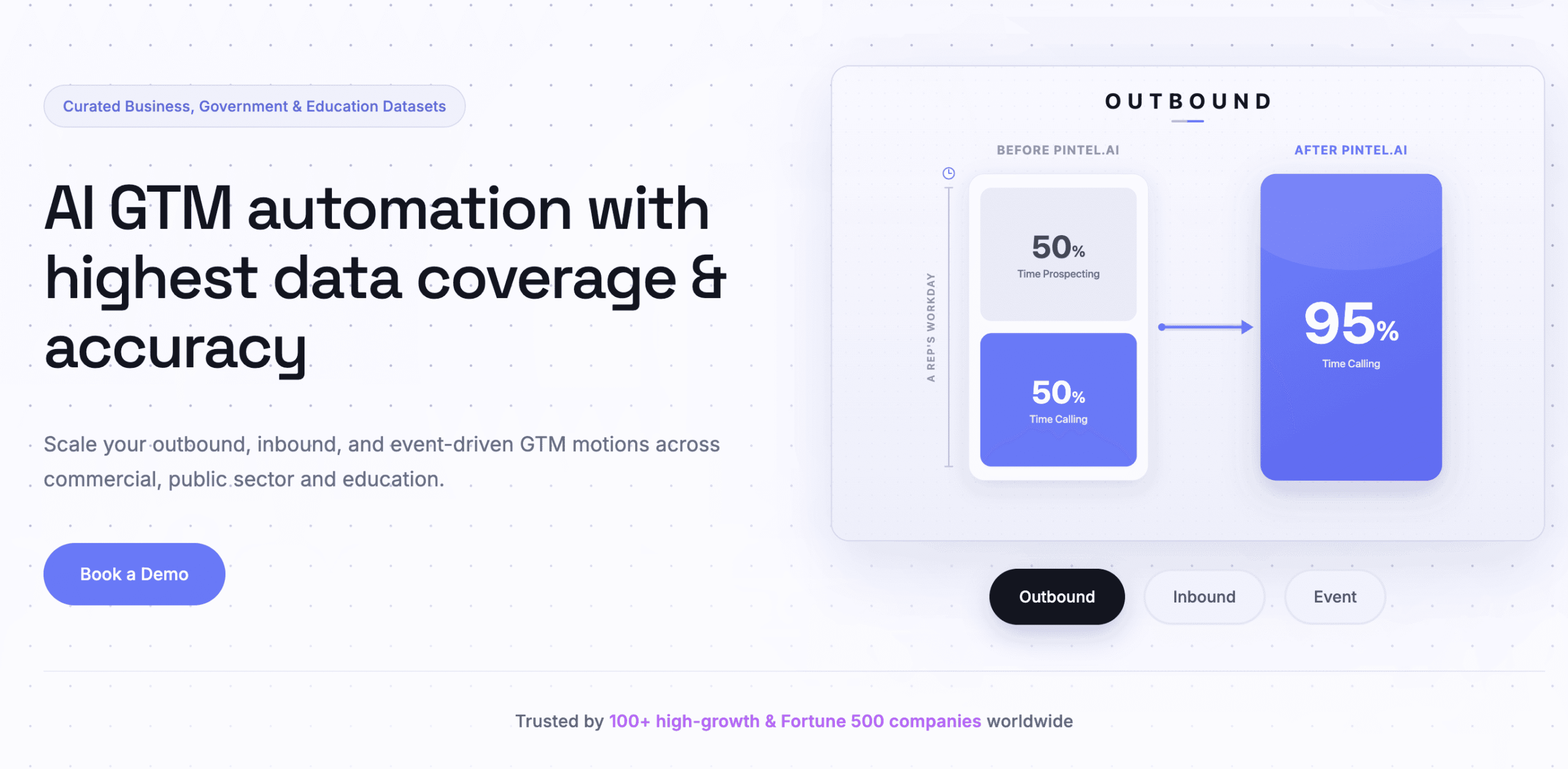
Pintel.ai helps B2B sales teams build targeted business email lists across APAC by combining proprietary data with waterfall enrichment across 30+ trusted data providers. Instead of relying on a single database, it verifies and enriches business contacts using multiple sources to improve email coverage and accuracy across countries such as Australia, Singapore, Japan, India, South Korea, and Southeast Asia.
Why it stands out
- Combines proprietary data with waterfall enrichment across 30+ trusted providers to improve APAC business email coverage and accuracy.
- Helps teams generate business email lists across APAC, the US, Europe, GCC, LATAM, and other global markets from a single platform.
- Supports multilingual search, making it easier to discover companies and decision-makers across non-English-speaking APAC markets.
- Finds high-fit companies, verified business emails, and decision-maker contacts from one platform, reducing the need for multiple regional databases.
- Flexible pricing without per-seat restrictions, making it easier to scale outbound prospecting across multiple markets.
Security and compliance: ISO 27001 certified, SOC 2 (AICPA), GDPR compliant, HIPAA compliant, CCPA compliant, and VAPT certified.
Best for: Sales teams that want to generate accurate B2B business email lists across APAC while also prospecting globally from a single sales intelligence platform.
2. Lusha
Lusha’s Chrome extension reveals contact details quickly for a low entry price, and its Australia and Singapore coverage benefits from those markets’ high LinkedIn adoption. Its credit system charges 10 credits per phone number pulled from the same monthly allowance as email credits, and the database itself is not broken out by country, so consent basis is never disclosed market by market.
Pricing: Starter from $37.45/user/month (annual), Pro from $52.45/user/month (annual).
3. RocketReach
RocketReach’s annual lookup allotment model gives predictable pricing for a team that can estimate its volume in advance, and its email coverage in Australia and Singapore is more reliable than its phone data across the same markets. Coverage thins out further into Southeast Asia and South Asia, and overage lookups beyond the annual cap are billed per lookup.
Pricing: Essentials from $27/month (annual, email-only), Pro from $69/month (annual, adds phone).
4. Ampliz
Ampliz holds a genuinely large proprietary APAC dataset, over 400 million contacts across 16 countries, with particular depth in healthcare through its HealthAtlas product, but it publishes no general consent-basis policy the way Pintel.ai does. Pricing is entirely quote-based with no public self-serve tier, and credible reports put entry packages near $15,000 a year before add-ons for intent data or extra seats.
Pricing: Custom, quote-based, entry packages reported near $15,000/year.
5. EasyLeadz
EasyLeadz built its reputation on a pay-per-verified-contact model, refunding credits for wrong mobile numbers, which is a genuinely useful guarantee for India-heavy lists. Its sourcing leans heavily on LinkedIn and India-based data, so coverage informally extends into the rest of APAC rather than being built for it directly, with no consent-basis documentation of its own.
Pricing: Free plan with 5 phone credits, Startup tier from roughly $29/month (annual, India-priced).
6. Hunter.io
Hunter.io finds and verifies business email addresses through domain search and pattern matching, but it does not return phone numbers at all, and it applies the exact same sourcing logic to an APAC contact as it would to a US or European one, with no APAC-specific consent basis documented.
Pricing: Starter from $49/month for 2,000 credits.
7. Snov.io
Snov.io bundles email finding, verification, and a built-in outreach sequencer into one plan, but like Hunter.io, it treats APAC the same as any other region and documents no country-specific consent basis for any of its lists.
Pricing: Starter from $39/month.
8. UpLead
UpLead ties each credit to a verified email plus a mobile direct dial, which keeps accuracy reasonably high, but APAC fill rates are unpredictable since the region is not broken out from the global database, and no consent basis is disclosed by country.
Pricing: Essentials from $74/month (annual) for 170 credits.
9. Kaspr
Kaspr reveals contact details directly from LinkedIn profiles through a Chrome extension, which works as well in Singapore or Mumbai as it does anywhere else LinkedIn is widely used, but its data is only as current as the underlying profile, and it makes no consent-basis claim of any kind.
Pricing: Starter from $45/user/month (annual).
10. DataCaptive
DataCaptive sells pre-built, licensed bulk email lists and claims a 95% accuracy rate along with blanket opt-in and CAN-SPAM compliance, but that claim is not broken out by APAC country, and buyers commonly report that quoted prices shift after the sales call and that verification standards vary between packages. A static list also cannot tell a team which contacts were sourced under which country’s consent rule, which matters most in Japan.
Pricing: Quote-based, typically $299 to $1,500+/month depending on volume and targeting.
Before You Buy an APAC Business Email Database
Three checks catch most of the problems this comparison has covered.
- Ask for a sample from the specific country you are targeting, not the pooled “APAC” list. A Singapore-heavy sample tells you nothing about Japan coverage.
- Ask the vendor directly which lawful basis applies to each country in the list. If they cannot answer for Japan specifically, treat that country’s contacts as unverified consent until proven otherwise.
- Ask whether “verified” means checked once at collection or re-verified close to when you actually send, since the gap between those two can be the difference between a working list and a stale one. Whatever provider you choose, keeping the results synced through clean CRM hygiene practices is what keeps a purchased list from decaying immediately.
A single provider rarely answers all three on its own, which is exactly why the comparison table above lists what each one actually documents rather than a single blended “best overall” score.
FAQs: APAC Business Email Database Providers
What is the best way to generate B2B leads across APAC?
Generating B2B leads across APAC starts with accurate company and contact data. Instead of relying on separate country-specific databases, many sales teams use platforms that combine business email data, company intelligence, and contact enrichment to build targeted prospect lists across the region.
What Is the Best APAC Business Email Database Provider for B2B Sales?
The best APAC business email database provider depends on whether a team needs documented consent basis across multiple APAC countries, deep coverage in one specific market, or just a fast way to find emails already published on LinkedIn or a company site. No single list works the same way in Tokyo, Singapore, and Jakarta, so the right provider is the one that is honest about where its data actually holds up.
Is one APAC email list valid across every country in the region?
No. Singapore, Australia, Japan, India, and Indonesia each apply different consent rules to a purchased business email list. A provider that treats APAC as one pool without documenting country-specific consent basis is passing that risk on to the buyer.
Which APAC countries have the strictest email consent rules?
Japan is the strictest, since its APPI and anti-spam email law require opt-in consent for every email address, including corporate ones, with no B2B exemption. Singapore is the most permissive, since it excludes standard business contact details from its personal data definition entirely.
Do global email finder tools like Hunter.io and Snov.io work well for APAC contacts?
They find and verify emails competently, but neither treats APAC as a distinct sourcing region or documents a country-specific consent basis. They work fine for finding an address; they do not answer whether sending to it is lawful in that specific country.
What should I check before buying an APAC business email database?
Request a sample from your actual target country rather than the pooled regional list, ask which consent basis applies per country, and confirm whether contacts are re-verified close to send time or only checked once at collection.
Is buying a business email list legal in Singapore?
Generally yes. Singapore’s PDPA excludes standard business contact information, name, job title, work email, and work phone, from its personal data definition, and runs an opt-out rather than opt-in model for B2B email.
How is India’s new data protection law affecting APAC email databases?
India’s DPDP Act requires opt-in consent and had its implementing rules notified in November 2025, with full enforcement and fines beginning in May 2027. Providers that have not adjusted sourcing practices ahead of that date carry rising risk for any India-heavy list.
What is the difference between an APAC business email database and a global one?
A genuinely APAC-built database sources and documents consent by country inside the region. A global database applies the same sourcing and verification logic everywhere, including APAC, without accounting for the region’s different consent laws country by country.