Most government BD teams have the same problem. They find out about contracts after a competitor already has the advantage.
By the time an RFP shows up on SAM.gov, the agency has usually already talked to vendors, shaped what they want, and started building a shortlist. Getting in at that stage makes it very hard to win on anything other than price.
The platform you use to track government bids and contracts determines whether you get into agency conversations early, or show up after the direction is already set.
This guide compares 7 platforms across all three tiers of government bid tracking: free federal portals, paid bid aggregators, and intelligence platforms. Each one is reviewed on what it genuinely does well and where it falls short.
What Are the Best Platforms to Track Government Bids and Contracts?
The best platforms to track government bids and contracts are SAM.gov for free federal solicitations, Pintel.ai for early procurement signals and agency contact data, GovWin IQ for federal forecasts, and BidNet Direct for state and local bids. The right platform depends on which government levels you target and whether you need published bid listings or early intelligence before bids go public.
Why Do Most BD Teams Miss Government Contract Opportunities?
The problem is not a lack of bids. The US federal government awards more than $700 billion in contracts every year. State and local governments add hundreds of billions more.
The problem is timing.
Most teams track government bids and contracts by watching published solicitations. But by the time an RFP is posted, the agency has already spent weeks, sometimes months, figuring out what they need. In many cases, they have already had informal conversations with vendors.
Teams that consistently win government contracts are already talking to agencies 12 to 18 months before the RFP posts, not the week it appears.
This means the best bid tracking platform is not the one showing you the most published bids. It is the one that surfaces the right signals early enough for you to act on them.

What Are the Three Types of Platforms for Tracking Government Bids and Contracts?
Not all platforms work the same way. There are three types, and each serves a different part of your BD workflow.
Type 1, Free government portals. Official websites where agencies are required to post solicitations. Good for finding what is already public. No early warnings or contact data.
Type 2, Paid bid aggregators. Commercial tools that pull bids from many portals into one searchable feed with alert tools. Saves time compared to checking portals manually. Still shows only published bids.
Type 3, Government sales intelligence platforms. Tools that track signals before a bid is published. Things like contract expirations, budget approvals, leadership changes at agencies, and new technology programs. Built for teams building pipeline before the RFP exists.
Most BD teams need at least one tool from each type. Knowing which tier each platform belongs to tells you exactly what you are getting before you pay for it.
With that picture clear, here is how the seven most-used platforms compare.
7 Best Platforms to Track Government Bids and Contracts
Each platform below is reviewed on coverage, bid alerts, contact intelligence, signal depth, pricing, and best use case. Pricing is based on publicly available information. Verify current pricing directly with each vendor.
1. SAM.gov: Good for Finding Federal Bids, No Pre-Bid Intelligence
SAM.gov is the official US federal procurement portal. Every federal solicitation above the simplified acquisition threshold must be listed here. It is also where vendors must register to be eligible for federal contracts.
What it does well:
- Complete list of federal solicitations, RFPs, RFIs, and Sources Sought notices
- Free email alerts filtered by NAICS code, agency, set-aside type, or keyword
- Contract award data and agency spending history
- Vendor registration and certifications required for federal work
Where it falls short:
- No state, local, or municipal coverage
- No early signals, only shows bids that are already published
- No contact data for contracting officers or program managers
- Search requires manual filtering, no smart matching or AI-assisted discovery
SAM.gov is non-negotiable for federal BD, but it is not a complete BD platform. Every federal vendor needs it. Very few can rely on it alone.
Best for: All federal vendors as a baseline monitoring tool. Use alongside a paid intelligence platform.
2. Pintel.ai: Best for Tracking Government Contract Opportunities Before They Are Posted
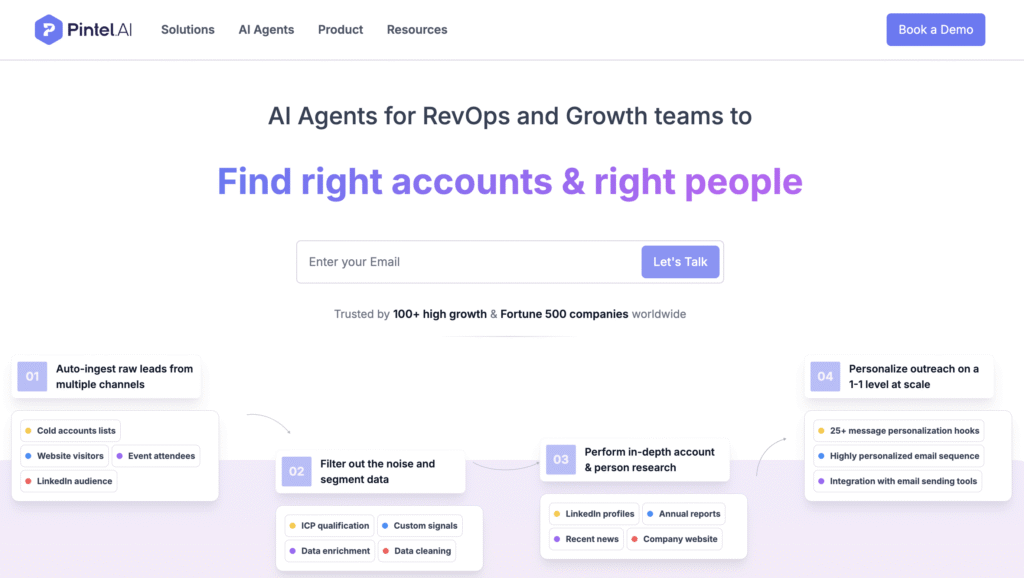
Pintel.ai is a government sales intelligence platform built for BD teams that want to find government contract opportunities before they are formally published.
Most platforms show you what is already public. Pintel.ai shows you what is coming, so your team can get into agency conversations while there is still time to influence the outcome.
Early Procurement Signals
- Tracks contract expirations and rebid windows months before they go public
- Monitors Sources Sought notices, budget approvals, and agency technology programs
- Surfaces leadership changes at agencies, which often signal new buying priorities
- Covers federal, state, local, education, healthcare, and international government markets
Agency Contact Intelligence
- Pulls decision-makers, program managers, and contracting officers from government directories and records that most platforms do not index
- Covers institutions beyond federal agencies: school districts, healthcare systems, local governments, and public sector organizations in niche verticals
- Gives BD teams the name and contact details to act on an opportunity, not just the signal that one exists
Knowing a contract is expiring is useful. Knowing who manages that contract and being able to reach them is what turns intelligence into pipeline.
For teams targeting public sector, education, healthcare, manufacturing, and similar verticals, Pintel.ai’s proprietary government data covers institutions that standard tools completely miss.
Pintel.ai’s buying signal tracking also surfaces which agencies are actively evaluating new vendors, based on procurement records, budget documents, board agendas, and strategic plans, before a formal bid is posted.
Security and compliance: ISO 27001 certified, SOC 2 (AICPA), GDPR compliant, HIPAA compliant, CCPA compliant, and VAPT certified.
Best for: B2G sales teams and capture managers tracking government contract opportunities across federal, state, local, education, healthcare, and global government markets who need early intelligence and agency contact data in one platform.
3. GovWin IQ: Good for Federal Procurement Forecasts, Limited on Contact Data
GovWin IQ, built by Deltek, tracks federal procurement forecasts, contract awards, and expiring contracts. It is one of the most widely used tools for formal federal capture management workflows.
What it does well:
- Federal procurement forecasts showing upcoming agency requirements before solicitations post
- Contract expiration and rebid tracking with period-of-performance timelines
- Award history and incumbent data by agency, NAICS code, and contract vehicle
- Pipeline management tools built around formal capture stages
Where it falls short:
- Contact data for contracting officers and program managers is limited
- State and local government coverage is thin
- No international government coverage
- Enterprise pricing limits access for smaller contractors
Best for: Mid-to-large federal contractors running formal capture management. Teams evaluating GovWin IQ alternatives that include contact intelligence can compare purpose-built options.
4. Bloomberg Government: Good for Federal Research, Limited for Active Pipeline Building
Bloomberg Government (BGOV) combines federal procurement data, legislative tracking, and agency spend analysis in one platform. It is used mainly by large contractors and advisory firms that need policy context alongside procurement data.
What it does well:
- Federal award data, forecasts, and agency spending history in one place
- Legislative and regulatory tracking alongside procurement data
- Agency spend reports for market sizing and strategic planning
- Alerts for contract awards and expiring agreements
Where it falls short:
- Very little contact intelligence for agency decision-makers
- No state or local government coverage
- Built around research, not active pipeline management
- Enterprise pricing is not accessible for most BD teams
Best for: Large federal contractors and advisory firms that need legislative and regulatory context alongside procurement data. Less useful for teams focused on outreach and relationship building.
5. BidNet Direct: Good for State and Local Bids, No Federal Coverage
BidNet Direct pulls together solicitations from state, county, city, and municipal governments across the US into one searchable platform. For vendors focused on state and local work, it saves a lot of time compared to checking individual government procurement sites.
What it does well:
- Aggregates bids from thousands of state and local agencies in one place
- Email alerts by procurement category, geography, and keyword
- Covers IT, construction, professional services, supplies, and more
- Bid document access and download for subscribers
Where it falls short:
- Federal solicitations are not covered
- No pre-bid signals, forecasts, or contract expiration tracking
- No contact data for procurement officers or agency staff
- Coverage varies significantly by state
Best for: Vendors focused on state, county, and municipal government bids and contracts who want one feed instead of manually checking dozens of portals.
6. DemandStar: Good for Cooperative Purchasing, Not a Full BD Tool
DemandStar connects vendors with government agencies through a national procurement network, mainly for cooperative purchasing contracts and local government solicitations.
What it does well:
- Covers thousands of local and state government agencies in a single network
- Cooperative purchasing contract discovery alongside open solicitations
- Vendor profiles that procurement officers use when looking for new suppliers
- Automated alerts for category-matched solicitations
Where it falls short:
- Federal coverage is not a core feature
- No pre-bid signals, procurement forecasts, or contract expiration tracking
- No contact data for procurement officers or department heads
- More of a procurement network than a BD intelligence tool
Best for: Vendors targeting cooperative purchasing and local government agencies. Works best as a supplemental channel, not a primary platform.
7. BidSync: Good for Multi-State Bid Monitoring, No Signal Intelligence
BidSync aggregates state and local solicitations across the US with keyword alerts, bid tracking, and document management tools. It covers a similar use case to BidNet Direct with comparable limitations.
What it does well:
- Multi-state bid aggregation across a wide range of procurement categories
- Keyword and category alerts across subscribed states
- Bid document tracking for vendors managing multiple responses
- Compliance and certification tracking for multi-state vendors
Where it falls short:
- No federal coverage
- No pre-bid signals or procurement forecasts
- No contact data for agency stakeholders
- Coverage quality varies significantly by state
Best for: Vendors managing bid responses across multiple states who want consolidated tracking and document management in one place.
The table below gives a side-by-side view of how all seven platforms compare on the criteria that matter most for BD teams.
Platform Comparison: Government Bids and Contracts Tracking
| Platform | Government Coverage | Bid Alerts | Contact Intelligence | Pre-Bid Signals | Pricing | Best For |
|---|---|---|---|---|---|---|
| SAM.gov | Federal only | NAICS and keyword email alerts | None | None: published bids only | Government portal | Federal bid baseline monitoring |
| Pintel.ai | Federal, state, local, education, healthcare, international | Pre-solicitation signal alerts | Decision-makers, program managers, contracting officers from non-indexed government sources | Contract expirations, Sources Sought, budget signals, leadership changes, tech program announcements | Custom | Pre-RFP pipeline building across all government tiers globally |
| GovWin IQ | Federal, limited state | Forecast and award alerts | Limited agency contacts | Federal procurement forecasts, contract expirations | Contact sales | Federal capture management teams |
| Bloomberg Government | Federal | Award and legislative alerts | Minimal | Legislative signals only | Contact sales | Enterprise federal research |
| BidNet Direct | State, local, municipal | Category and keyword alerts | None | None: published bids only | Contact sales | State and local bid aggregation |
| DemandStar | State, local, cooperative | Category-matched notifications | None | None: published bids only | Contact sales | Cooperative purchasing discovery |
| BidSync | State, local | Keyword and category alerts | None | None: published bids only | Contact sales | Multi-state bid monitoring |
This comparison is based on first-hand platform knowledge, publicly available product information, and commonly reported user experiences. Contact each vendor directly for the latest pricing and product details.
One pattern stands out immediately: every platform except Pintel.ai only covers published bids. For teams whose BD motion starts before the RFP, that is a structural gap, not a feature gap.
How Do You Choose the Right Platform to Track Government Contract Opportunities?
No single platform covers every government tier and every BD workflow. Most teams end up using a combination. These four questions will narrow the decision fast.
Which government levels are you targeting?
- Federal only: SAM.gov plus one intelligence platform is a strong starting point
- State and local: Add BidNet Direct or BidSync alongside your federal tools
- Multiple tiers (federal, state, education, healthcare): You need unified coverage, otherwise you are managing five separate alert systems
Do you need published bids or early signals?
- If your team starts outreach when the RFP posts, Tier 1 and Tier 2 tools are enough
- If you build pipeline 12 to 18 months out, you need a platform that tracks expiring contracts, budget signals, and Sources Sought notices before anything is formally published
Do you need contact data alongside bid data?
- Most platforms on this list show you the opportunity, not who to call
- If your BD motion requires reaching contracting officers or program managers, choose a platform that extracts contacts alongside bid monitoring
- An opportunity without a contact path is not a pipeline entry, it is a research note
What gap exists in your current setup?
- Audit your current workflow before adding a new tool
- Missing federal forecasts? Missing state bids? Showing up late to rebids?
- The gap tells you which platform to add, not the vendor’s feature list
Teams with a clear understanding of the government procurement process already know which gap to fill before they evaluate any tool.
One more thing most teams underestimate, and it changes how you think about every platform on this list.
What Do Most Teams Get Wrong About Tracking Government Bids and Contracts?
Most BD teams treat bid tracking as a search activity. Find the bid, respond to it, hope to win.
That approach has one big problem: by the time you find the bid on SAM.gov or a state portal, it is usually too late to compete on anything but price.
The teams that win government contracts consistently are not tracking the most bids, they are engaging the right people at agencies before requirements are locked.
Here is what that looks like in practice:
- Knowing a contract is expiring 12 months out
- Finding the program manager and contracting officer who own it
- Making contact and building credibility before the RFP is drafted
- Shaping what the agency includes in the requirement, based on real conversations
A published RFP is not the start of an opportunity. It is the end of the pre-solicitation window. Teams that start tracking government bids and contracts only at the RFP stage are competing against vendors who have been in the room for months.
Final Takeaway
Tracking government bids and contracts is not just about knowing what has been published. It is about knowing what is coming, and getting in front of the right people before everyone else does.
The platform stack that supports this combines SAM.gov as your federal baseline, a state and local aggregator for the government tiers in your ICP, and a government sales intelligence platform for early signals and agency contact data.
If your team is still responding to RFPs cold, the platform is not the only thing to change. The timing of your BD motion is. Start earlier than your competitors, and the platform becomes a force multiplier, not a search engine.
Frequently Asked Questions
What are the best platforms to track government bids and contracts?
The best platforms to track government bids and contracts are SAM.gov for free federal solicitations, Pintel.ai for pre-bid procurement signals and agency contact data, GovWin IQ for federal forecasts, and BidNet Direct for state and local bids. The right choice depends on which government levels you target.
Is SAM.gov free to use?
Yes. SAM.gov is the official US federal procurement portal with no subscription cost. Vendors can register, search solicitations, and set up alerts at no charge. It covers federal solicitations only and does not include early signals or contact data.
What is the difference between a bid aggregator and a government intelligence platform?
A bid aggregator collects published bids from multiple government portals into one searchable feed. A government intelligence platform tracks signals before bids are published, including contract expirations, budget events, leadership changes, and Sources Sought notices that show up months before a formal RFP.
How do I find government contract opportunities before the RFP is posted?
Track contract expirations, Sources Sought notices, agency budget approvals, and leadership changes at target agencies. These signals appear 6 to 18 months before a formal RFP. A government sales intelligence platform like Pintel.ai surfaces these automatically across federal, state, local, and education markets.
What is the best platform for tracking state and local government bids?
BidNet Direct and BidSync aggregate state, local, and municipal solicitations from thousands of agencies across the US. For teams that also need contact data and pre-bid signals alongside state and local tracking, Pintel.ai covers all government tiers in one platform.
How far ahead can you find out about government contracts?
Sources Sought notices and procurement forecasts typically appear 6 to 18 months before the formal RFP. Budget signals, contract expiration data, and agency strategic plans can indicate requirements 12 to 24 months in advance. Intelligence platforms surface these signals long before any public portal shows the bid.
How do you sell to US counties?
Successful county sales depend on tracking buying signals, identifying decision makers, and engaging before formal procurement begins.