Searching for government contracts isn’t just about monitoring SAM.gov. Federal, state, and local opportunities are spread across multiple procurement portals, agency websites, and public records, making manual tracking difficult as your pipeline grows.
Government contracts search is the process of finding, tracking, and qualifying contract opportunities across these sources. While official platforms provide access to procurement data, dedicated government contracts search tools help businesses discover relevant opportunities faster, monitor contract renewals, identify buying signals, and find the right agency contacts.
In this guide, we’ll compare the best government contracts search tools, explain their key features, compare free and paid options, and help you choose the right platform for your team.
What Is Government Contracts Search?
Government contracts search is the practice of identifying active solicitations, upcoming bids, and contract renewal opportunities across public sector agencies. It covers everything from finding a new federal RFP on SAM.gov to tracking a state agency’s procurement calendar or identifying when an existing contract is due for renewal.
Businesses of all sizes use this process to build their public sector pipeline. For small businesses, it often means finding set-aside contracts through federal programs. For mid-market and enterprise firms, it can mean tracking large agency spending patterns and positioning before a solicitation goes live.
The challenge is that government contract opportunities are scattered. They sit across dozens of federal databases, hundreds of agency websites, and thousands of state and local procurement portals. That fragmentation is exactly why dedicated tools exist, and why the right one can make a significant difference to your pipeline.
Where Can You Search Federal Government Contracts?
The good news is that federal contract data is public, but it is spread across multiple sources.
- SAM.gov is the official federal contracts database and the primary source for active federal solicitations.
- Agency procurement websites often publish pre-solicitation notices, RFIs, and procurement updates before opportunities appear on SAM.gov.
- State procurement portals list opportunities for state and local government contracts.
- Public records such as budget documents, board meeting minutes, and procurement plans can reveal upcoming buying activity.
- Government contracts search platforms combine data from multiple sources and add intelligence such as contract renewals, incumbent vendors, agency contacts, and buying signals.
Each source provides part of the picture. As the number of opportunities grows, manually monitoring all of them becomes difficult, which is why many businesses rely on dedicated government contracts search platforms.
Why Manual Government Contracts Search Is Difficult
Searching for government contracts manually becomes difficult as your pipeline grows. Here are the biggest challenges teams face:
- Fragmented sources: Opportunities are spread across SAM.gov, state procurement portals, agency websites, and public records.
- Too many opportunities: Reviewing thousands of contract listings to find the right fit takes significant time.
- Missed opportunities: Short response windows and frequent solicitation updates make manual monitoring unreliable.
- Contract renewals: Identifying expiring contracts and upcoming recompetes requires ongoing tracking.
- Decision-maker research: Finding the right agency contacts often takes more time than finding the opportunity itself.
- Competitive intelligence: Understanding incumbent vendors and existing contracts requires additional research across multiple sources.
Dedicated government contracts search platforms automate these tasks by combining contract discovery, tracking, and intelligence into a single workflow. Here’s how the leading platforms compare.
Best Tools for Government Contracts Search
Choosing the right platform depends on what problems you are trying to solve. Some teams need basic search and alerts. Others need deep intelligence on agencies, incumbents, and buying signals. The table below gives you a quick comparison, followed by a more detailed breakdown of each tool.
| Tool | Best For | Free/Paid | Key Strength |
|---|---|---|---|
| SAM.gov | Federal solicitation search | Free | Official federal database |
| Pintel.ai | Government contract discovery, buying signals | Paid | Public sector GTM teams |
| GovWin (Deltek) | Enterprise BD teams | Paid | Opportunity tracking, market research |
| GovTribe | Federal market research | Paid | Awards data, agency spending |
| BidPrime | Multi-source bid aggregation | Paid | State and federal bid alerts |
| FindRFP | Broad bid aggregation | Paid | Coverage across government levels |
| BGov (Bloomberg Government) | Policy and procurement intelligence | Paid | Legislative and procurement data |
| Deltek | Enterprise government contractors | Paid | Full BD lifecycle management |
1. SAM.gov
Overview: SAM.gov is the U.S. federal government’s official System for Award Management. It is where all federal agencies post contract opportunities above the simplified acquisition threshold, and it is the authoritative source for federal business opportunities.
Best for: Any business that sells to the federal government. SAM.gov registration is required to receive federal contracts, and its Opportunities module is the baseline for any federal contracts search.
Key strengths: It is free, authoritative, and covers all federal civilian and defense solicitations. You can set up basic email alerts by keyword, NAICS code, or agency. Contract award data is also available here.
Limitations: The search interface is limited. Filters are basic, alerts can be noisy, and the platform provides no intelligence on agency buying cycles, incumbents, or contract renewals. It tells you what is posted, not what is coming.
2. Pintel.ai
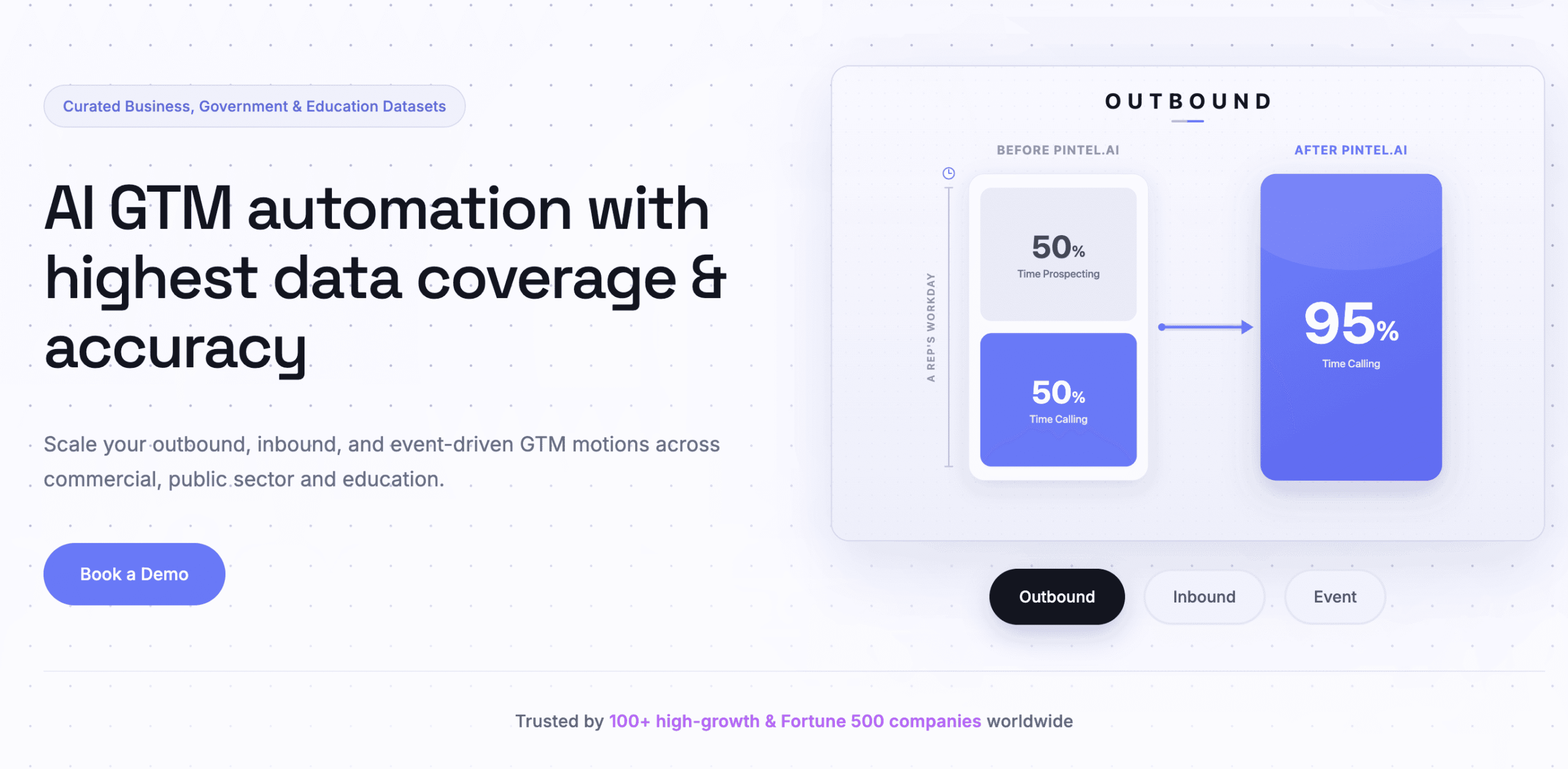
Overview: Pintel.ai is an AI-powered public sector GTM platform that helps sales teams discover, qualify, and prioritize government contract opportunities across every stage of the procurement lifecycle. It combines government contract discovery, early buying signals, contract renewal intelligence, verified agency contacts, and AI-powered account prioritization in a single platform, helping teams build a stronger and more predictable public sector pipeline.
Best for: Business development and public sector sales teams looking to discover government contract opportunities, engage agencies earlier, and prioritize high-intent accounts.
Discover Government Contract Opportunities
Pintel helps teams discover relevant government contract opportunities across federal, state, and local agencies from a single platform. Instead of manually searching multiple procurement portals, users can quickly identify opportunities that match their products, target agencies, and ideal customer profile.
Key capabilities:
- Search active government contract opportunities across multiple public procurement sources.
- Filter opportunities by agency, location, industry, NAICS code, keyword, contract type, and contract value.
- Monitor newly published opportunities with automated alerts.
- Build targeted opportunity lists for business development and account planning.
Find Opportunities Before They Reach the Market
Winning government contracts often starts long before an RFP is published. Pintel helps teams identify procurement activity early so they can engage agencies during the planning stage.
Key capabilities:
- Monitor budget approvals and funding allocations.
- Track modernization initiatives and procurement planning.
- Surface buying signals from agency announcements, board meetings, planning documents, and public records.
- Identify agencies showing active buying intent before formal solicitations are released.
Track Contract Renewals and Incumbents
Replacement contracts are among the most predictable opportunities in government sales. Pintel helps teams identify upcoming recompetes and prepare well before renewal cycles begin.
Key capabilities:
- Track expiring government contracts.
- Identify incumbent vendors.
- Monitor expected recompete timelines.
- Prioritize upcoming renewal opportunities.
Competitive Intelligence
Understand the competitive landscape before pursuing an opportunity by analyzing existing contracts and agency purchasing patterns.
Key capabilities:
- Identify incumbent vendors and existing contract holders.
- Review contract values and contract durations.
- Track historical purchasing activity.
- Understand renewal windows and competitive positioning.
Identify the Right Decision Makers
Successful government sales require engaging the stakeholders who influence purchasing decisions, not just the contracting officer.
Key capabilities:
- Access verified procurement contacts.
- Find program managers, department heads, agency leaders, and other key stakeholders.
- Build complete account maps for target agencies.
Prioritize High-Intent Accounts
Not every agency is actively buying. Pintel helps sales teams focus on the accounts most likely to convert.
Key capabilities:
- Rank agencies using AI-powered buying signals.
- Prioritize accounts based on funding activity, procurement planning, contract renewals, and buying intent.
- Focus outreach on agencies with the highest purchase potential.
CRM and Workflow Integration
Pintel integrates with existing GTM workflows, allowing teams to act on opportunities without switching between multiple tools.
Key capabilities:
- Sync opportunities, contacts, and account intelligence with CRM platforms.
- Export data into existing sales workflows.
- Keep opportunity intelligence updated automatically.
Limitations: Pintel is a paid platform designed for organizations with active public sector sales teams. Businesses looking only for basic federal bid searches may find SAM.gov sufficient when getting started.nly for basic federal bid searches may find SAM.gov sufficient for getting started.
3. GovWin (Deltek)
Overview: GovWin is Deltek’s federal market intelligence platform, designed for business development teams at established government contractors.
Best for: Mid-to-large contractors with dedicated BD teams working across multiple agencies and contract vehicles.
Key strengths: Strong opportunity tracking, pipeline management tools, and federal market research. It covers pre-RFP opportunities and includes teaming and subcontracting data.
Limitations: Pricing is on the higher end, and the platform can be complex for smaller teams. It is designed for teams that already have significant government contracting volume.
4. GovTribe
Overview: GovTribe provides federal market intelligence with a focus on award history, agency spending patterns, and vendor tracking.
Best for: Teams doing market research on agencies and competitors before pursuing new opportunities.
Key strengths: Award data visualization, agency spending breakdowns, and contract history. It is easier to navigate than some enterprise tools and offers useful competitive analysis.
Limitations: Less focused on pre-solicitation intelligence. Better suited for research than for day-to-day pipeline management.
5. BidPrime
Overview: BidPrime aggregates bid opportunities from federal, state, and local sources and delivers them via email alerts and a searchable database.
Best for: Teams that need broad coverage across government levels, not just federal.
Key strengths: Multi-source aggregation, customizable alerts, and coverage that extends to state and municipal procurement. Useful for businesses that compete across federal and SLED markets.
Limitations: Less depth on intelligence features such as buying signals or incumbent tracking. Primarily a bid notification service.
6. FindRFP
Overview: FindRFP provides access to government bids and RFPs across federal, state, and local agencies.
Best for: Small to mid-size businesses looking for broad opportunity discovery across government levels.
Key strengths: Wide coverage, relatively affordable pricing, and ease of use for teams new to government procurement.
Limitations: Limited analytics and no pre-solicitation intelligence. Primarily a bid aggregation tool.
7. BGov (Bloomberg Government)
Overview: Bloomberg Government combines federal procurement data with legislative intelligence, making it useful for teams that need to understand how policy and budget decisions translate into contracting activity.
Best for: Teams operating at the intersection of policy and procurement, such as those working in defense, health, or infrastructure.
Key strengths: Deep legislative and regulatory coverage, federal procurement data, and strong editorial content on government spending trends.
Limitations: Premium pricing and a broader scope than many BD teams need. Best suited for teams where policy context is directly relevant to contract strategy.
8. Deltek
Overview: Deltek offers a full suite of tools for government contractors, including GovWin for market intelligence and Costpoint for project accounting and ERP.
Best for: Established government contractors that need integrated business development, project management, and financial management tools.
Key strengths: End-to-end platform for government contracting operations. Strong integrations across the business.
Limitations: Significant investment in both cost and implementation. Overkill for smaller teams or companies in early stages of building a government practice.
How to Choose the Right Government Contracts Search Tool
The right platform depends on where you are in your government sales journey and what problems you are actually trying to solve. Here is a simple framework.
Budget. SAM.gov is free and a reasonable starting point. Paid platforms range from a few hundred to several thousand dollars per month. Evaluate cost against the value of the pipeline you expect to generate.
Team size. A solo BD rep with a focused agency list has different needs than a team of ten covering multiple departments. Platforms like Pintel.ai, GovWin, and Deltek are designed for teams with dedicated public sector resources.
Contract volume. If you are responding to dozens of bids per month, bid aggregation and alert tools become essential. If you are focused on a small number of high-value pursuits, intelligence platforms that provide depth on specific agencies will serve you better.
Automation needs. Manual research does not scale. If your team is spending significant hours per week on research, a platform that automates monitoring, contact enrichment, and alert delivery will have a clear ROI.
CRM integration. If your team runs outbound from a CRM, choose a tool that can push data into it directly. Platforms that require manual export and import add friction to your workflow.
Competitive intelligence. If you are frequently competing on recompetes or working in crowded market segments, incumbent tracking and contract renewal data are important.
Contact data. If finding the right decision-makers at agencies is a bottleneck for your team, prioritize platforms that include verified agency contact information.
Buying signals. If your goal is to engage agencies before solicitations are published, early buying signal data is the most valuable capability you can add to your stack.
Once you have mapped your needs to these criteria, you will find that most teams end up with a combination: SAM.gov for baseline federal coverage, and one intelligence platform for deeper pipeline work.
Free vs Paid Government Contracts Search Platforms
Most teams start with free tools and upgrade when the volume or complexity of their pipeline justifies the investment. Here is a clear breakdown.
| Platform | Cost | Coverage | Intelligence Depth |
|---|---|---|---|
| SAM.gov | Free | Federal only | Solicitations only |
| Pintel.ai | Paid | Federal + state signals | High: buying signals, renewals, contacts |
| GovWin (Deltek) | Paid | Federal | High: pipeline management, teaming |
| GovTribe | Paid | Federal | Medium: awards, spending |
| BidPrime | Paid | Federal + state + local | Medium: bid aggregation |
Free platforms like SAM.gov give you the raw data. They show you what has been posted. Paid platforms add the layer of intelligence around what is about to happen, who is involved, and how to prioritize your time.
Teams should consider upgrading to a paid platform when they are consistently missing opportunities because they found them too late, spending significant staff hours on research that could be automated, unable to identify decision-makers without manual digging, or missing contract renewal windows that represent replacement opportunities.
The upgrade is not about volume. It is about whether your current process is causing you to lose deals you should be winning.
Common Mistakes Businesses Make
Even teams with access to good tools make avoidable mistakes in their government contracts search process. Here are the most common ones.
- Relying only on SAM.gov. SAM.gov is essential but incomplete. It shows you posted solicitations, not what is coming or what is happening at the agency level before a posting.
- Manual searching without a system. Checking sources ad hoc leads to gaps. Set up structured alerts and monitoring workflows so nothing falls through.
- Not setting alerts. Most platforms support keyword and category alerts. Not using them means you are discovering opportunities reactively rather than proactively.
- Ignoring state and local opportunities. Federal contracts get the most attention, but many businesses find significant revenue in SLED markets that they are overlooking entirely.
- Missing decision-makers. Responding to a solicitation without knowing who wrote the requirements and who will evaluate responses puts you at a disadvantage. Invest in finding the right contacts early.
- Ignoring contract renewals. Recompetes are among the most predictable opportunities in government contracting. Tracking expiring contracts and preparing before the solicitation is published is a repeatable pipeline strategy.
- Poor opportunity qualification. Not every posted opportunity is worth pursuing. Develop a scoring rubric that accounts for fit, competition level, incumbent strength, and your chances of winning before committing to a response.
Avoiding these mistakes will improve both your win rate and your team’s efficiency. With the right habits and the right tools in place, let us look at the questions that come up most often.
Final Thoughts on Government Contracts Search
Finding government contract opportunities is easier when you have the right combination of tools. Start with official procurement sources like SAM.gov, then add platforms that help you discover active opportunities, track contract renewals, and identify buying signals as your pipeline grows. The right government contracts search platform can save time, improve opportunity qualification, and help your team focus on winning more business.
Frequently Asked Questions About Government Contracts Search
What is government contracts search?
Government contracts search is the process of finding and tracking contract opportunities published by federal, state, and local government agencies.
What is the best platform for government contracts search?
SAM.gov is the official platform for federal contracts. If you need contract discovery, buying signals, contract renewals, and verified contacts in one place, platforms like Pintel.ai provide more advanced capabilities.
Can I search federal, state, and local government contracts in one platform?
Yes. Many government contracts search platforms aggregate opportunities from federal, state, and local procurement sources into a single searchable platform.
Is SAM.gov enough for government contracts search?
SAM.gov is essential for federal opportunities, but it does not provide buying signals, contract renewal tracking, competitive intelligence, or verified decision-maker contacts.
How can I find government contracts before an RFP is published?
Look for early buying signals such as budget approvals, procurement plans, modernization initiatives, and upcoming contract renewals.
How do I find government contracts relevant to my business?
Use filters such as agency, NAICS code, industry, location, contract value, and keywords to narrow opportunities that match your products or services.
Why is contract renewal tracking important?
Contract renewals help you identify upcoming recompete opportunities before a new solicitation is released, giving your team more time to prepare.
How do I find the right contacts for a government contract?
Look beyond the contracting officer. Program managers, department heads, and procurement leaders are often key decision-makers during the buying process.
Are paid government contracts search tools worth it?
If you’re managing a growing government sales pipeline, paid tools can save time by automating contract discovery, opportunity tracking, and account research.
How often are new government contract opportunities published?
New opportunities are published every day across federal, state, and local procurement portals. Setting up alerts helps you discover new contracts as soon as they become available.
Can small businesses benefit from government contracts search tools?
Yes. Government contracts search tools help small businesses find relevant opportunities faster, monitor set-aside contracts, and reduce the time spent on manual research.
When should I automate my government contracts search?
If you’re searching multiple procurement portals or tracking many opportunities, automating your government contracts search with Pintel.ai can help you discover contracts faster, identify buying signals, and reduce manual research.