Healthcare sales teams face a data problem that does not exist in any other vertical. The buyers are not the people on LinkedIn. The organizations are structured differently from standard company hierarchies. And the data is subject to HIPAA obligations that most general B2B tools were not designed to meet.
This guide compares seven healthcare company data providers on the three requirements that determine whether healthcare data is usable: compliance, organization coverage, and decision-maker reach.
What Are Healthcare Company Data Providers?
Healthcare company data providers are B2B databases supplying contact and firmographic records for hospitals, health systems, medical groups, specialty clinics, and healthcare technology companies.
What separates genuine healthcare company data providers from general B2B tools with a healthcare filter is organization intelligence depth. A hospital has procurement committees, clinical leadership, IT decision-makers, and compliance officers who each control different buying decisions. A tool returning only contact names without that hierarchy misses how healthcare buying actually works.
Most B2B data providers claim healthcare coverage. Few can supply HIPAA-compliant records for the decision-makers who actually sign contracts.

Quick Comparison: Healthcare Company Data Providers at a Glance
The table compares each provider on the dimensions that determine whether healthcare data is actually usable for outbound sales, not total database size.
| Provider | HIPAA Status | Org Coverage | Decision-Maker Types | Data Sourcing Model | Best For | Pricing |
|---|---|---|---|---|---|---|
| Pintel.ai | Yes (HIPAA compliant) | Hospitals, health systems, medical groups, specialty clinics, healthcare tech | CMO, CFO, procurement, IT, clinical operations | Proprietary healthcare databases + 30+ provider waterfall | Full healthcare ICP with buying signals and ICP filtering | Contact sales |
| Definitive Healthcare | Yes (healthcare-native) | Hospitals, health systems, physician groups, ambulatory care | Clinical, administrative, IT, procurement | Proprietary healthcare-specific database | Deep healthcare organization intelligence | Contact sales |
| ZoomInfo | Yes (HIPAA compliant) | Large hospital systems, healthcare tech companies | Business and administrative roles | Community contributions + web crawl | Healthcare tech company contacts, enterprise hospital systems | Contact sales |
| IQVIA | Yes (life sciences focus) | Pharma, biotech, medical device, payer organizations | Clinical, medical affairs, commercial | Proprietary life sciences database | Pharma and life sciences sales motions | Contact sales |
| Bombora | Partial | Healthcare organizations researching relevant topics | Intent-level (no direct contact records) | B2B publisher network intent signals | Identifying healthcare accounts in active research mode | Contact sales |
| LinkedIn Sales Nav | N/A (professional network) | Healthcare companies with LinkedIn-active professionals | Administrative, business, IT (clinical buyers often absent) | LinkedIn professional network | Healthcare tech company outreach, warm introductions | From $99/user/mo |
| Apollo.io | Partial (verify before use) | Healthcare tech and SaaS companies, limited for provider organizations | Business and administrative roles | Third-party + web crawl + community | Healthcare tech companies, SMB health services | From $49/user/mo |
This comparison is based on first-hand platform knowledge, publicly available product information, and commonly reported user experiences. Contact each vendor directly for the latest pricing and product details.
How We Evaluated These Healthcare Company Data Providers
Healthcare company data providers were evaluated on three criteria that have no equivalent in general B2B data evaluation. General criteria like “contact depth” and “CRM integration” matter in any vertical. These three are specific to healthcare.
- HIPAA compliance: Non-compliant healthcare data creates legal exposure before the first outreach touch. Verify this independently. A BAA (Business Associate Agreement) is the minimum to request from any vendor.
- Organization hierarchy coverage: A hospital has clinical leadership (CMO, department heads), administrative leadership (CFO, COO), IT leadership (CIO, CMIO), and procurement teams. Healthcare company data providers returning only contact names without organizational context miss how purchasing committees actually operate.
- Non-LinkedIn buyer coverage: Physicians, clinical directors, and procurement officers in provider organizations are less LinkedIn-active than buyers in technology or finance. Tools relying exclusively on LinkedIn scraping miss the clinical side of every healthcare buying committee.
These three gates form the Healthcare Data Compliance Funnel. A tool that fails any one of them is a general B2B tool with a healthcare label, not a genuine healthcare company data provider.
The Healthcare Data Compliance Funnel
The Healthcare Data Compliance Funnel is a three-gate evaluation framework for healthcare company data providers: HIPAA compliance first, organization-level coverage second, clinical decision-maker reach third. A tool that fails any gate is not a healthcare data provider in a meaningful sense, it is a general B2B tool with a healthcare label applied to its industry filter.
According to Gartner’s sales strategy research, complex sales in regulated industries require data providers that understand the compliance environment, not just the contact database. The compliance gate alone eliminates a significant portion of general B2B tools from healthcare sales motions.
Healthcare data without HIPAA compliance exposes your team to legal risk before the first email is sent.
Here is what separates tools that genuinely pass the funnel from those that do not, examined provider by provider.
1. Pintel.ai: HIPAA-Compliant Healthcare Data With Proprietary Organization Databases and Buying Signals
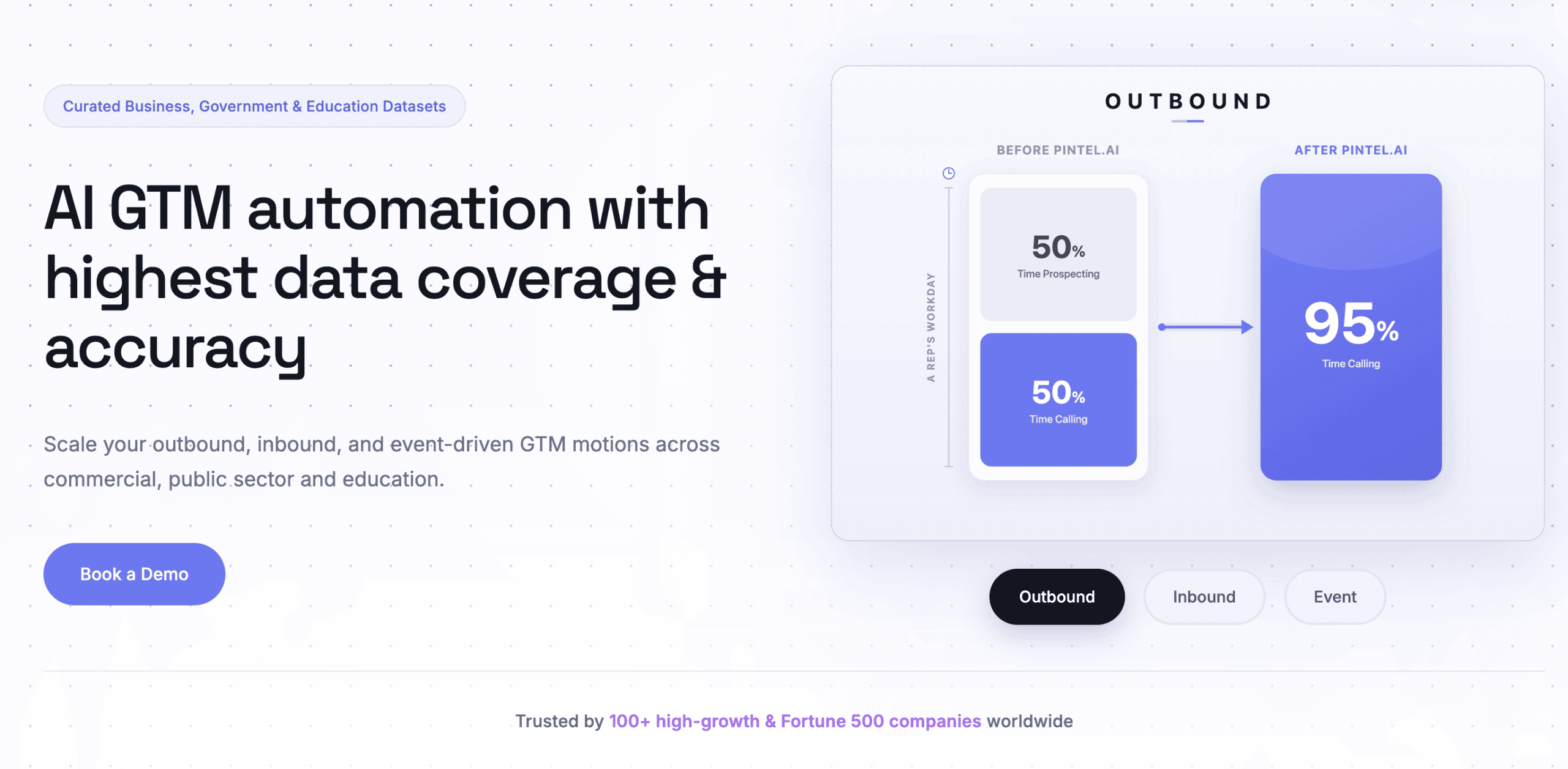
Pintel.ai is built for healthcare sales teams that need HIPAA-compliant contact data, organization-level healthcare intelligence, and real buying signals across provider, payer, and healthcare technology markets
Unlike general B2B databases built around LinkedIn-visible professionals, Pintel covers healthcare buying committees that include clinical leadership, procurement teams, IT stakeholders, operational leadership, and compliance decision-makers.
Strengths:
- HIPAA compliant healthcare contact data
- Coverage across hospitals, health systems, IDNs, specialty clinics, ambulatory care centers, diagnostic networks, physician organizations, payer organizations, and healthcare technology companies
- Proprietary healthcare databases including hospital procurement records, CMS data, healthcare system directories, and sector-specific sources beyond LinkedIn
- Healthcare buying signals including CIO and CMIO hiring, EHR migration activity, clinical IT expansion, procurement team growth, physician group acquisitions, hospital network expansion, and technology evaluation activity
- Waterfall enrichment across 30+ vetted providers with healthcare-specialized sources prioritized first
- Profile-level ICP filtering that separates CMOs, procurement directors, IT leadership, clinical operations, and financial buyers within the same healthcare organization
- Enrichment API for adding healthcare contacts, signals, and organization intelligence into existing CRM workflows
Limitation: Sequencing integrates with external outreach tools.
Pricing: Contact sales
Best for: Healthcare sales teams targeting hospitals, health systems, provider organizations, payer organizations, specialty clinics, and healthcare IT buyers that need HIPAA-compliant data with buying signals and organization-level ICP filtering.
Security and compliance: ISO 27001 certified, SOC 2 (AICPA), GDPR compliant, HIPAA compliant, CCPA compliant, and VAPT certified.
2. Definitive Healthcare: The Deepest Purpose-Built Healthcare Organization Database
Definitive Healthcare is a purpose-built healthcare intelligence platform covering US hospitals, health systems, physician groups, ambulatory care centers, and post-acute care facilities. It is the most specialized of the healthcare company data providers on this list, built from the ground up for healthcare sales and marketing rather than adapted from a general B2B database.
Its depth in healthcare organization intelligence is genuine: bed counts, EMR and imaging system installations, physician affiliations, and financial health indicators from Medicare cost reports. For healthtech companies selling to hospitals, this context is the difference between a cold outreach and a relevant one.
Strengths:
- Purpose-built healthcare organization database covering hospitals, health systems, physician groups, and ambulatory care
- Technology installation data: which EMR and clinical systems each organization uses
- Physician affiliation mapping across facilities
- Financial health indicators from Medicare cost reports for account qualification
- HIPAA-native architecture
Limitations:
- Individual contact records (emails, mobile numbers) require supplemental enrichment alongside the organization intelligence
- US-focused and primarily useful for healthcare technology and services companies, less so for payer or pharma motions
Pricing: Contact sales | Best for: Healthcare technology companies selling to hospitals and health systems that need deep organizational intelligence including technology installations, physician affiliations, and facility financial health.
3. ZoomInfo: HIPAA-Compliant General B2B With Healthcare Coverage, Weak for Clinical Buyers
ZoomInfo is HIPAA compliant with solid healthcare coverage for business and administrative roles. The community-contribution sourcing model that works well for enterprise tech companies produces thinner coverage on the clinical side of provider organizations, which is the gap the framework section established.
Strengths:
- HIPAA compliant for healthcare data workflows
- Strong coverage of healthcare technology companies and administrative roles at large hospital systems
- Org chart data for enterprise healthcare organizations with active LinkedIn presences
- Intent data via Bombora integration for identifying healthcare organizations researching specific topics
Limitations:
- Clinical buyers (physicians, department heads, clinical directors) are underrepresented because they are less LinkedIn-active
- Community-sourced model means smaller hospitals and independent physician groups have thinner records
- No healthcare-specific organization intelligence (EMR installations, bed counts, physician affiliations)
Pricing: Contact sales | Best for: Healthcare tech sales teams targeting administrative and IT roles at larger hospital systems, particularly teams already using ZoomInfo for other verticals.
4. IQVIA: The Life Sciences and Pharma Standard, Limited for General Healthcare Sales
IQVIA is the dominant data provider for pharmaceutical, biotech, and medical device companies. Its database is built for life sciences commercial operations: physician prescribing data and sales territory optimization for pharma field forces. For healthcare technology or general healthcare services companies, IQVIA is over-engineered and priced accordingly.
Strengths:
- The standard healthcare company data provider for pharmaceutical and medical device companies
- Physician-level prescribing and clinical behavior data unavailable in any general B2B database
- Payer organization intelligence for healthcare companies selling to insurance and managed care
- Deep clinical decision-maker coverage for life sciences commercial teams
Limitations:
- Built for life sciences commercial operations, not general healthcare technology or services companies
- Enterprise pricing reflects pharmaceutical industry budgets, difficult to justify for healthtech teams
Pricing: Contact sales | Best for: Pharmaceutical, biotech, and medical device field sales to physician and clinical audiences. Not the right tool for healthtech or general healthcare services teams.
5. Bombora: Healthcare Intent Signals Without Contact Records
Bombora tracks which healthcare organizations are researching specific topics across a B2B publisher network. Healthcare-relevant intent topics include “EHR replacement,” “revenue cycle management software,” “clinical documentation improvement,” and “patient engagement platforms.” When a health system surges on these topics, Bombora surfaces them weeks before a formal procurement process begins, which is exactly when outreach converts best.
Strengths:
- Healthcare organization intent signals: identifies health systems and provider organizations actively researching relevant topics
- Early signal on procurement activity before formal RFPs are published
- Integrates with most CRM and marketing platforms as a prioritization signal layer
Limitations:
- No contact records: must be paired with a dedicated healthcare company data provider for outreach
- Intent signals identify organizations, not individual decision-makers within those organizations
- HIPAA compliance status should be verified for specific healthcare use cases
Pricing: Contact sales | Best for: Healthcare sales teams wanting to prioritize which hospital systems and healthcare organizations to focus outreach on, used alongside a contact database rather than as a standalone tool. For a broader overview of how intent data layers onto contact data, see the buyer intent tools guide.
6. LinkedIn Sales Navigator: Healthcare Tech Works, Clinical Buyers Do Not
LinkedIn Sales Navigator is the most limited of the healthcare company data providers on this list for clinical buyer discovery. It covers healthcare administrators and health IT professionals well, but physicians, clinical department heads, and procurement officers at provider organizations are significantly less LinkedIn-active and much harder to find through search.
Healthcare organizations buy on committees, not individuals. Organization-level database depth matters more than raw contact count. Sales Navigator does not provide the organization-level intelligence that healthcare purchasing decisions require.
Strengths:
- Strong coverage of healthcare technology company professionals and administrative roles at large health systems
- InMail for direct outreach to healthcare business leaders and health IT professionals
- TeamLink for warm introductions through team connections at target healthcare organizations
Limitations:
- Clinical decision-makers, physicians, and procurement officers at provider organizations are significantly underrepresented
- No native contact data export and no organization-level healthcare intelligence (bed counts, EMR, financial health)
Pricing: From $99/user/mo | Best for: Healthcare technology sales teams reaching administrative and IT leadership at healthcare companies, paired with a dedicated healthcare company data provider for clinical buyer and organization intelligence.
7. Apollo.io: Healthcare Tech Contacts Work, Provider Organization Data Is Thin
Apollo works well for healthcare technology companies and digital health startups. For hospital systems, physician groups, and provider-side clinical roles, results are thinner. Verify HIPAA compliance directly with Apollo before use in any healthcare-specific workflow.
Strengths:
- Healthcare technology company contacts and health insurance organization coverage for administrative roles
- Built-in sequencing for healthcare email outreach without a separate tool
- Self-serve pricing accessible for smaller healthcare sales teams
Limitations:
- HIPAA compliance status: verify directly before using Apollo for healthcare-specific data workflows
- Provider organization coverage (hospitals, clinics, physician groups) is thinner than healthcare-native tools
- No healthcare-specific organization intelligence
Pricing: From $49/user/mo | Best for: Teams selling to healthcare technology companies and digital health organizations where buyers are LinkedIn-active. Not recommended as a standalone tool for provider-side healthcare prospecting.
Choosing the Right Healthcare Company Data Provider
The right healthcare company data provider depends on which side of healthcare you sell to: provider, payer, or life sciences.
- Selling to hospitals, health systems, and provider organizations: Pintel for HIPAA-compliant data with buying signals and clinical ICP filtering. Definitive Healthcare for deep organization intelligence including technology installations and physician affiliations. Use both for full coverage of the provider market.
- Selling to pharma, biotech, or medical device companies: IQVIA is the specialist for life sciences commercial motions. Pintel covers these organizations alongside broader healthcare market access.
- Selling to healthcare technology companies: ZoomInfo or Apollo for administrative and IT contacts. LinkedIn Sales Navigator for warm introductions. Add Pintel for clinical buyer coverage and buying signals.
- Prioritizing which healthcare accounts to pursue first: Bombora surfaces organizations surging on relevant healthcare topics. Layer it on top of a contact database to focus outreach where procurement intent already exists.
The B2B database providers guide covers how healthcare company data fits into a full outbound stack. The data enrichment guide covers filling gaps through waterfall enrichment, and the B2B company data providers guide covers sourcing model evaluation. Teams experiencing wrong or missing contacts during healthcare prospecting will find the root causes in the company data accuracy guide.
Frequently Asked Questions About Healthcare Company Data Providers
What are the best healthcare company data providers for B2B sales?
Pintel.ai for HIPAA-compliant data with buying signals and clinical ICP filtering across the full healthcare market. Definitive Healthcare for deep hospital and health system organization intelligence. IQVIA for pharma and life sciences commercial motions. ZoomInfo for healthcare tech companies. Bombora for intent signals on top of any contact database.
Do healthcare company data providers need to be HIPAA compliant?
Yes. Before signing with any healthcare data vendor, request their BAA (Business Associate Agreement) and confirm how they handle PHI (Protected Health Information) under their data processing terms. The tools with confirmed HIPAA compliance on this list: Pintel, Definitive Healthcare, ZoomInfo, and IQVIA. Apollo requires direct verification. A vendor that cannot produce a BAA on request is not a safe choice for healthcare outreach workflows.
Why is LinkedIn Sales Navigator limited for healthcare prospecting?
Clinical buyers, including physicians, department heads, and procurement officers at provider organizations, are significantly less LinkedIn-active than their counterparts in technology or finance. Sales Navigator works well for administrative and IT roles at healthcare companies but misses much of the clinical buying committee that drives healthcare purchasing decisions.
What is the difference between Definitive Healthcare and IQVIA?
Definitive Healthcare covers hospitals, health systems, physician groups, and ambulatory care with deep organizational intelligence for healthcare technology sales. IQVIA is designed for pharmaceutical and medical device commercial operations with physician prescribing data and life sciences-specific analytics. Both are healthcare-native but serve different sales motions.
How does Pintel cover healthcare organizations that other tools miss?
Pintel accesses proprietary healthcare databases including hospital procurement records, CMS government data, and healthcare system directories that standard contact tools built on LinkedIn scraping cannot reach. It also identifies buying signals like leadership changes, technology procurement activity, and hiring patterns in clinical or IT roles that indicate an active evaluation window.
Is Bombora a healthcare company data provider?
Bombora is a healthcare intent data platform, not a contact database. It identifies which healthcare organizations are actively researching specific topics across a network of B2B publisher websites. It works best as a prioritization layer on top of dedicated healthcare company data providers for contact records, not as a standalone outbound source.